In this article
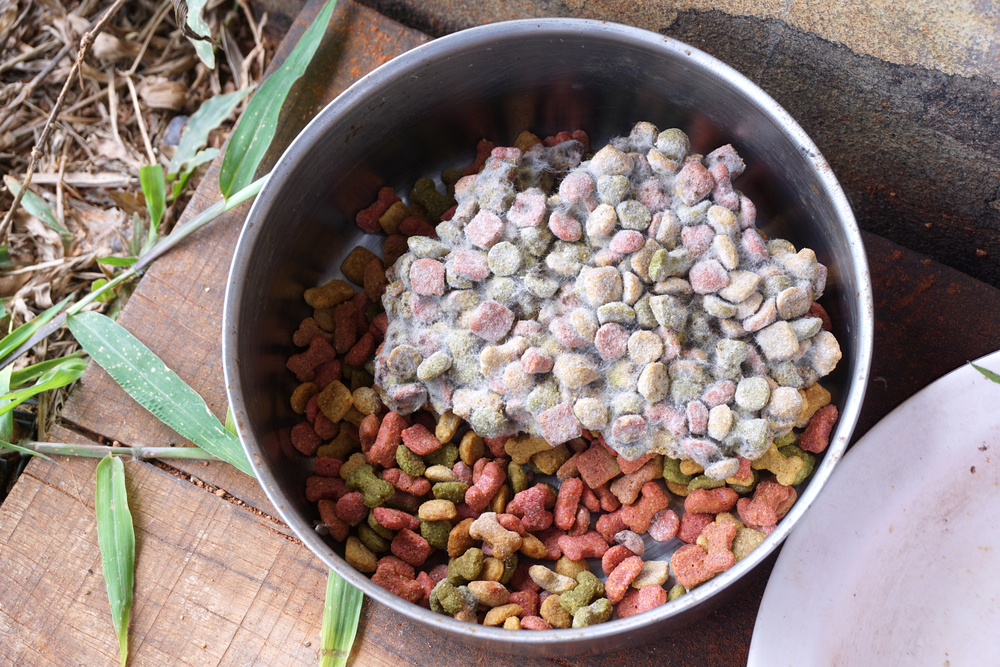
View 3 More +Manufacturing and distributing dog food is a complex process that requires many steps. While pet food companies have food safety and quality assurance protocols, incidents can still occur that may cause mold on dog food. Or sometimes, the moldy dog food may just be old and/or stored improperly. So what does mold on dog food look like? Signs of mold on dog food include white or gray dust over your dog’s kibble or fluffy and fuzzy growth.
The effects of mold on dogs can range from giving them an upset stomach to fatigue and in some cases, intoxication and death. So, it’s crucial for owners to know how to identify when dog food has gone bad and ensure that the food is safe for their dogs to eat.

How Mold Grows on Dog Food
Simply put, the air we breathe is filled with mold spores. It’s natural to find mold spores outdoors, and they can enter indoor spaces rather easily. The air is safe to breathe as long as the presence of spores is at a safe level.
When mold spores land on surfaces in an environment with the right conditions, the spores will grow into visible mold. Mold grows in places with a lot of moisture, high temperatures, and oxygen, or on a source of food. It also grows faster in warm and dark environments. So, when you think about it, dog food can be an ideal spot for mold to grow. Mold can get into dog food after manufacturing but also right in the processing if contaminated grains are included. This is the reason why sample testing is crucial for manufacturers.
Mold on Dry Dog Food

While dry dog food may not look or feel wet, it still has a moisture content. Mold also grows well on grains and nutrient-rich organic materials, like starch. Since grains and starchy vegetables, such as sweet potatoes, are common ingredients in dog food, it’s no surprise that mold can grow rather quickly.
Mold tends to grow more in the summer when the air is hotter and more humid than in winter. If you don’t store your dry dog food properly, it will grow mold. You’ll start to see white or gray dust lightly coating the food. Then, it’ll grow fuzzy. The color of the mold depends on the type of spores that are embedded in the dog food. Common colors include black, white, gray, green, yellow, and pink.
Mold on Wet Dog Food

Wet dog food is susceptible to mold because of all the moisture it contains. Once you open the can, the shelf life reduces drastically, and the food needs to be eaten within 30 minutes of being served. Clean and resealed wet dog food can be kept in the refrigerator for a maximum of 5 to 7 days.
Wet dog food that has gone bad will have a rancid or sour smell. Like dry dog food, if mold is present, you’ll start to see thin wisps of white fuzz coating the surface of the food. Then, the mold will grow denser and change to a darker color.

Common Molds Found in Dog Food
More than 1,000 species of mold have been identified in homes in the U.S. Some molds aren’t toxic, while others can be extremely toxic to canines. Here are common types of molds found in dog food.
Aspergillus

Aspergillus is a genus of several hundreds of mold species. Most people and dogs breathe in Aspergillus spores when they’re outside and don’t experience any adverse reactions. However, when the spores grow to mold, they develop mycotoxins that can make both dogs and humans sick. Aspergillus can be particularly dangerous because it can produce aflatoxins, which are strong and lethal.
Most Aspergillus will appear black on the surface and have a layer of white or yellow underneath.
Cladosporium

Cladosporium is a common household mold that’s known to grow on wallpaper, fabrics, wooden floors, and other surfaces found in homes. It can also grow on vegetables and meat.
This mold produces mycotoxins that can harm dogs and humans. The mold is usually black, brown, or green and grows in spots.
Penicillium

Penicillium is a type of mold commonly known to grow on meat and cheese. Some species of Penicillium are used to cure meat and cheeses and may not be toxic. However, there are toxic species, such as Penicillium citrinum, which commonly grow on grains.
The first stage of Penicillium growth is white. Then, the mold changes colors to become blue-green, gray, yellow, or pink.

What Happens If Your Dog Eats Moldy Dog Food
The effects that mold has on dogs will vary depending on the type of mold that it is. Some molds won’t be toxic and will not cause any illness in dogs. But many molds can cause dogs to develop an upset stomach and experience vomiting, diarrhea, nausea, and fatigue.
Some dogs may have mold allergies and may start coughing or sneezing, have nasal discharge, and experience difficulty breathing. More severe signs of prolonged exposure and consumption of mold can lead to neurological disorders, seizures, and organ failure.
If your dog is showing any of these signs and seeking the best possible treatment for your pup, we recommend speaking with a vet.
Did you know you can speak to a veterinarian without having to travel? Just head over to PangoVet. It's our online service where you can talk to a vet online and get the advice you need for your pet — all at an affordable price!

How to Prevent Feeding Your Dog Moldy Dog Food
It is important to understand that on rare occasions, mold toxins can be present without being clearly visible in the food. However, taking precautions and visibly inspecting the food, as well as regularly smelling it, can reduce the risks of feeding your dog moldy or spoiled food. Fortunately, there are concrete steps to follow in this regard.
1. Buy Food With Undamaged Packaging
Make sure the packaging is intact. Examine the bag or box for any tears or wet spots. If you have dog food delivered to your home, make sure to bring deliveries inside as soon as possible to prevent overexposure to heat and moisture.
If you receive a delivery of damaged dog food, notify the distributor right away to receive a new bag. Even if the coloring of the food looks normal, mold spores could have already settled on it and started growing. So, it’s best to discard the food without feeding it to your dog.

2. Check Expiration Dates
While pet stores are usually vigilant in removing expired food from their shelves, there’s always a chance for human error. So, before you put the food in your shopping cart, check the food label for the expiration date.
If you receive dog food deliveries, check the expiration date before opening the dog food packaging.
3. Examine the Food
When you open a bag of new dog food, check the surface to see if any of the top layers of kibble have a dusty coating on them. After that, sift through the bag and look for any unusually moist pieces of kibble. You can also check for any rancid or sour odors coming from the bag.
While wet dog food tends to have a stronger and more pungent smell than dry dog food, you can still smell an off odor if it’s gone bad. Make sure to check the coloring of the food to see if it looks out of the ordinary. The color and texture of the same recipe can vary slightly, as the food can be made in different batches. However, beware of any black or white spots, a greenish hue, or overly pink food.
4. Serve and Store the Food Properly
Make sure to always reseal your dog food bag after you scoop food out of it. You can also store the food in airtight containers that will keep the food dry and fresher for longer.
Canned food should be stored in a sealed container after opening or covered with a secure lid. Wet dog food should be refrigerated right away. Dry food can be kept in a bowl for up to 4 to 6 hours. Then, it should be discarded.

Conclusion
Mold can appear in dog food no matter how cautious you are because its growth depends on the environment. So, it’s important to stay vigilant and check for mold in dog food regularly. Even if you don’t see mold in your dog’s food, it’s better to be safe than sorry if you suspect that the food has gone bad because of changes in appearance, texture, and smell.
If you suspect that your dog has mold poisoning, contact a veterinarian and have a sample of the food they’ve eaten. Mold exposure may require professional help, and a veterinarian can help you take steps to make your dog feel better and have a full recovery.
Featured Image Credit: SOORACHET KHEAWHOM, Shutterstock