Get

In Your Inbox

Dogster is reader-supported. When you buy via links on our site, we may earn an affiliate commission at no cost to you. Learn more.

Why Some Dogs Treat Mealtime Like Playtime – And When to Pay Attention

Share

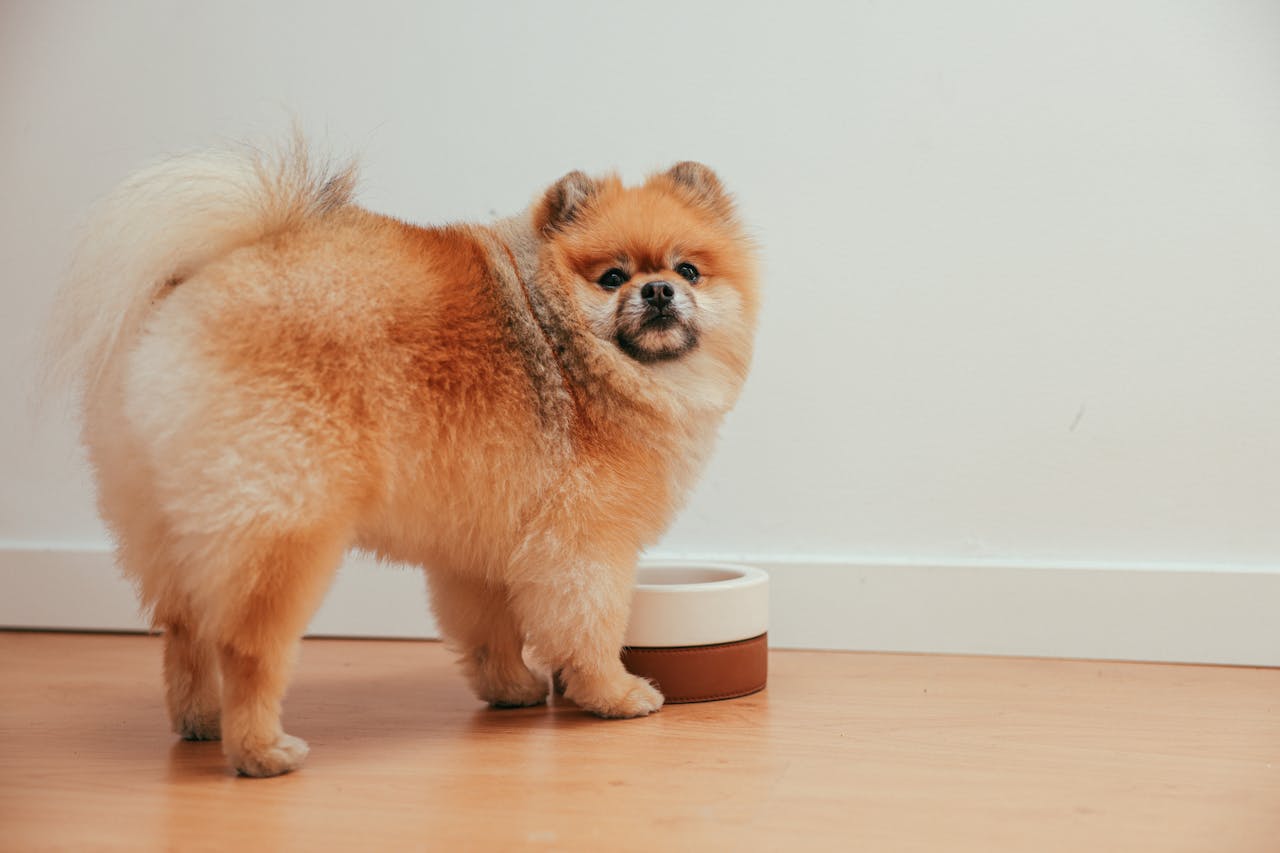
Brown Pomeranian Puppy with a bowl Looking at Camera

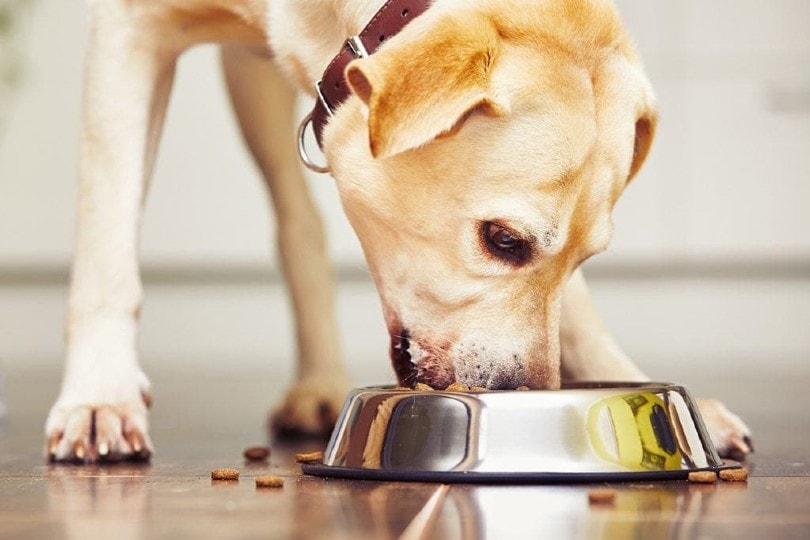
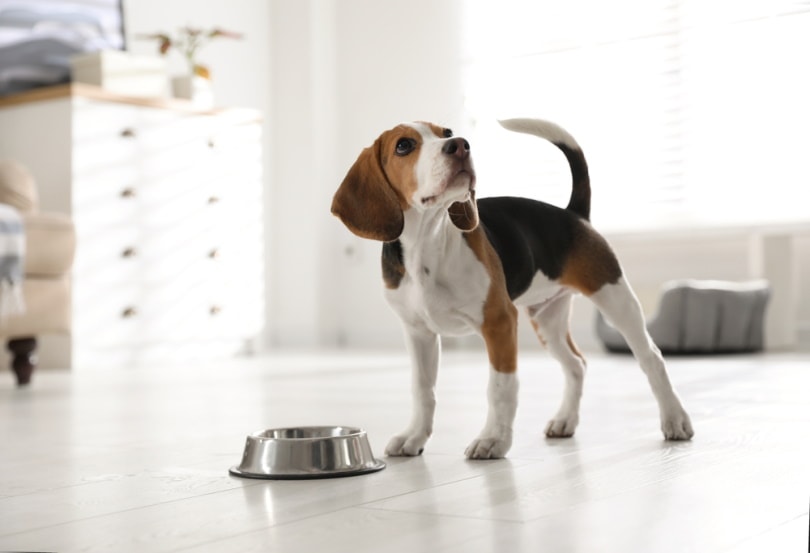
Most dogs are reliable eaters. Bowl goes down, food disappears. So when a dog starts batting kibble across the kitchen floor, tossing pieces in the air, or nosing their bowl around without actually eating from it, it tends to catch owners off guard. It looks odd. It can feel a little frustrating. But there are real reasons behind it, and most of them are straightforward once you know what to look for.

All dogs can exhibit this behavior, though puppies are particularly prone to it. When a dog is in a playful mood, the body language tends to be obvious: a relaxed posture, a wagging tail, maybe even a play bow directed at the food bowl. They are not confused. They are just treating mealtime as an extension of everything else that is fun.

Boredom is the most common culprit

Dogs that are not getting enough physical activity or mental stimulation have to find ways to fill that gap, and food is a convenient target. It moves, it smells interesting, and interacting with it tends to get a reaction from whoever is watching. In some cases, the behavior has been accidentally reinforced over time: the dog played with food, the owner laughed or engaged with it, and the dog filed that away as a successful strategy for getting attention.

The fix here is fairly practical. Building regular exercise into the day, and specifically exercising before meals rather than after, makes a real difference. In the natural order of things, dogs work before they eat. A dog that has burned energy is a dog more inclined to just eat. Keeping the eating area separate from play areas also helps draw a clearer line between the two activities.

Dog playing fetch indoors
Image Credit: Przemek Iciak, Shutterstock

Anxiety can make eating feel complicated

Not all food-playing is about fun. Anxious dogs, particularly those with generalized anxiety, sometimes struggle to eat in certain circumstances. Some will not eat alone and need a person nearby before they will settle at the bowl. The internal tension between wanting to eat and feeling unsettled can produce what is known as displacement behavior, which is essentially a way of redirecting that conflict into something else. Playing with food is one form it can take.

Anxiety in dogs shows up in a range of ways beyond mealtime, including destructive behavior, vocalization, panting, and a tucked tail. If food-playing seems connected to a broader pattern of anxious behavior, a vet is the right first call. There are effective ways to manage and treat anxiety in dogs, and it is worth addressing rather than working around.

Instinct plays a role, too

Dogs experience the world primarily through smell rather than sight, and food is no exception. A dog that seems fascinated by a new food, circling it, sniffing it extensively, or pushing it around before eating, may simply be doing a thorough sensory inspection before committing. This is especially common when a food has recently changed. It is not pickiness exactly; it is more like due diligence.

Puppies encounter this more often because everything is still new to them. Something that smells unfamiliar and moves when batted is genuinely interesting, and exploring it is a completely normal response. Most puppies grow out of treating every meal like a discovery.
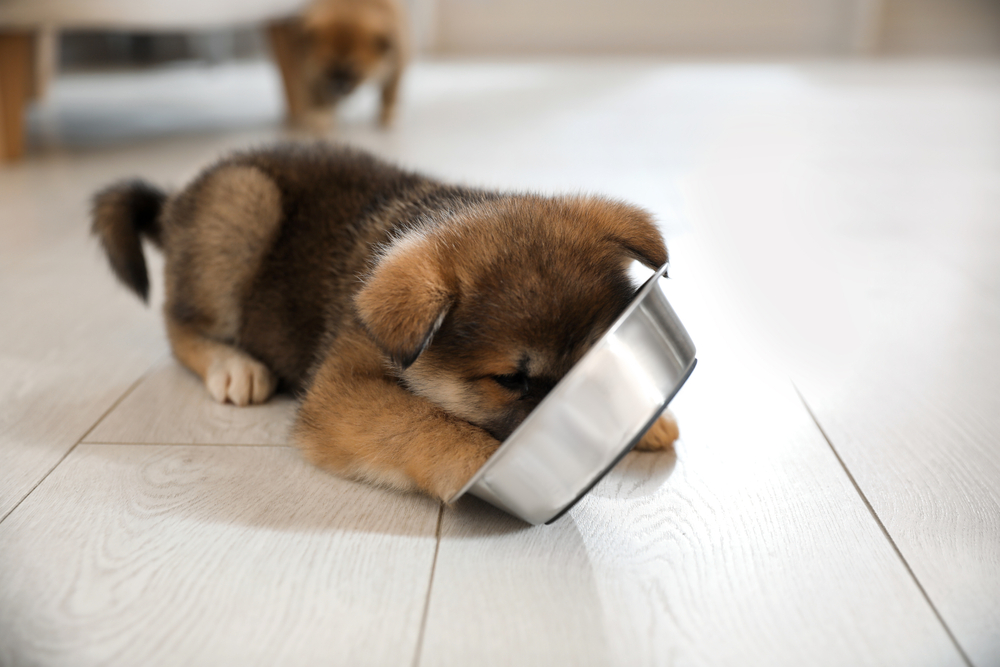
Little puppy eating from a stainless steel bowl
Image Credit: New Africa, Shutterstock

Portion size is worth checking

There is a less obvious explanation that gets overlooked: the dog has had enough. If a dog regularly leaves food in the bowl and then starts playing with what remains, that can be a signal that the portions are slightly too large. It is easy to overfeed with good intentions, but referring to a feeding guide based on the dog’s age, size, and activity level is a useful reality check. A full dog simply has less motivation to eat what is in front of them, and apparently more motivation to do something else with it.

What to do if the behavior persists

For most dogs, a combination of more exercise, calmer mealtimes, and consistent feeding routines is enough to bring things back to normal. Exercising before meals, not engaging with playful mealtime behavior, and keeping the eating area quiet and separate from the rest of the home all help establish a clearer routine.

If the behavior is accompanied by signs of stress, a loss of appetite that goes beyond playing, or any other changes that seem off, a vet visit is the sensible next step. Food play is rarely a serious issue, but it is occasionally a signal worth paying attention to.

Featured Image Credit: Cup of Couple, Pexels


Did You Know? 

  • Our brand-new posts are rounded up and included in our weekly emails. Don’t miss out on the latest – sign up for our newsletter below!

Want content like this delivered to you?

Sign Up For Our Newsletter

News, insights, expert advice, and everything dog

* By submitting, you agree to our Terms & Conditions and Privacy & Cookies Policy.


How useful was this post?

Click on a star to rate (you can leave written feedback after clicking submit)

Help us improve Dogster for pet parents!

Your feedback really matters.

What did you like about this post? Also how can we improve it?

Join the conversation

Leave a Reply

You’re very welcome to leave a comment or question. Please know that all comments must meet our community guidelines, and your email address will NOT be published. Let’s have a positive and constructive conversation.


Dogster's Digital Magazine is Back!​

Dogster Magazine Cover June 2026

Vet-approved health & behavior advice

Real dog stories & community features

Ask Dr. Paola- Help! My Vet Suggests a Biopsy for My Dog! (June 15, 2026)

Welcome to our “Ask Dr. Paola” series, where every Monday we bring expert advice straight from Dr. Paola Cuevas (MVZ) to help our...

Why Some Dogs Treat Mealtime Like Playtime – And When to Pay Attention

Most dogs are reliable eaters. Bowl goes down, food disappears. So when a dog starts batting kibble across the kitchen floor, tossing pieces...

Major Win for Dogs: Ontario Becomes the Final Province to Ban Ear Cropping and Debarking

​​Ontario has approved new animal welfare regulations that will prohibit elective ear cropping and devocalization (debarking) procedures in dogs from January 1, 2027....

Dogster’s Weekly Photo Contest Winners: Most Adorable Puppy (June 8, 2026)

Every week our team gets the privilege of sorting through our readers photos to choose what dogs will win this weeks contest! See...

More related

Australian Kelpie Dog Breed: Info, Pictures, Traits & History

The Australian Kelpie is a medium-sized dog that has become more popular in recent years due to their unconditional loyalty and high intelligence....

Why Do Dogs Thrive on Routine? 3 Vet-Verified Reasons

While all dogs have unique personalities, one thing they have in common is that they thrive on routine. Many experts agree that dogs...

Can Dogs Eat Tater Tots? Vet-Approved Facts & FAQ

Chances are that you didn’t feed your dog tater tots on purpose, but if they got into a few that were left out,...

We Love Doodles Dog Shampoo Review 2026: An Expert’s Breakdown

  About We Love Doodles We Love Doodles is a company dedicated to creating functional and affordable dog grooming products. They got their...

Keep reading

Can Dogs Eat Whipped Cream? Vet-Reviewed Nutrition Facts & Info

Our dogs can eat all sorts of things we can. After all, they are omnivores just like us! However, that doesn’t mean everything we stuff in our gullet belongs in our dog’s belly—or ours, if we’re being honest. So, how...

Can Dogs With Pancreatitis Eat Eggs? Vet-Approved Facts & FAQ

Pancreatitis is one illness you want to take seriously, as mismanaging this disease can quickly become fatal. Pancreatitis is the inflammation of the pancreas, the part of your dog’s body that creates hormones such as insulin and digestive enzymes. The...

Can Dogs With Pancreatitis Eat Eggs

What Time Should I Feed My Dog? Vet-Verified Feeding Guide

Canine nutrition can feel like an impossible labyrinth to navigate, whether you’re a first-time dog owner or not. There is so much information—and misinformation—out there, making it hard to know exactly what time of day to feed your dog and...

Schnauzer puppy dog eating tasty dry food from bowl

10 Best Affordable Dog Foods for Labs in 2026 – Reviews & Top Picks

Anyone who’s ever owned a Labrador Retriever knows that they love their food…a lot. In fact, a study has shown that a gene mutation associated with weight and food motivation has been found in Labradors. This means that Labs are...

labrador retriever eating dog food

Victor Dog Food vs Blue Buffalo 2026 Comparison: Pros & Cons

When it comes to choosing food for your dog, it can be confusing and difficult to choose between brands. We all want the best for our dogs, but it’s not uncommon to unintentionally select a food that isn’t appropriate for...

Dogster_Dog Food Victor VS Blue Buffalo

Can Dogs Eat Dill? Vet-Verified Nutrition Facts & Preparation Ideas

Dill (Anethum graveolena) is a member of the parsley family, Apiaceae, and is safe to feed to dogs, in moderation. There is no evidence that indicates that dill causes problems in dogs, but it is always best to feed it...

Dogster-Can-Dogs-Eat-Dill

When to Switch to an Adult Dog Food? Vet-Approved Facts & FAQ

Enthusiastic, sweet and downright fun—puppies are simply wonderful. All it takes is one look from those adorable puppy eyes to hook most people to the point of no return. If you’ve recently been adopted by one of these perfect creatures,...

beagle puppy near food bowl

Can Dogs Eat Truffles? Vet Reviewed Risks & Benefits

Dogs can eat truffles in moderation, and they are not toxic to dogs. You shouldn’t serve truffles to your dog regularly, however. Doing so can lead to nutritional issues since truffles don’t contain all the nutrients dogs need. Furthermore, because...

Can Dogs Eat Truffles

Love Dogs? So Do We! Join the Dogster Community

Stay informed with expert pet care insights delivered straight to your inbox! Discover professional guidance on animal behavior, feeding tips, trusted product picks, and much more.


Sign up for the Dogster Email Newsletter