
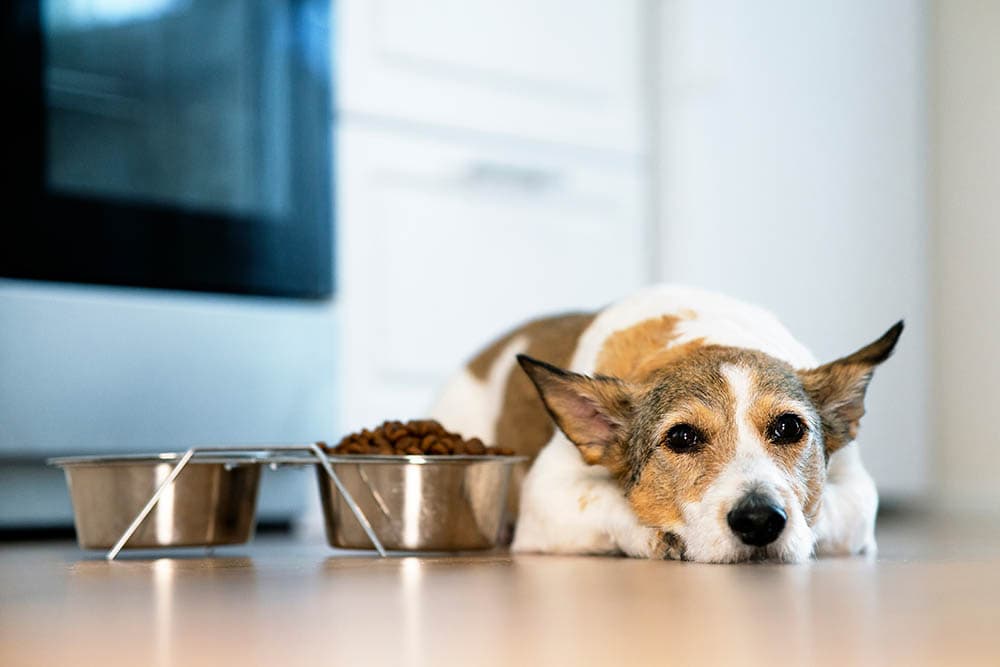
You’re probably familiar with the most common eating disorders in humans, such as anorexia and bulimia. You might not know that dogs can also have eating disorders, but they do not have the same complex mental concerns that plague these issues in people, so we refer to them as eating problems. In this article, we’ll discuss six eating problems affecting dogs and what to do if you suspect your pup has a problem.

The 6 Eating Problems That Can Affect Dogs
1. Megaesophagus
| Common Signs: | Regurgitation, vomiting, gagging when eating |
| Treatment: | Medication, diet changes, feeding tube |
This eating disorder is a physical condition that impacts the dog’s esophagus, which is the tube that connects the mouth with the stomach. Dogs with this condition develop an abnormally large esophagus that cannot properly transport food and water to the stomach. Because of that, food and water build up in the esophagus, often causing the dog to vomit or regurgitate1.
A common and severe complication of megaesophagus is aspiration pneumonia. This occurs when the dog breathes trapped food or water into their lungs. Megaesophagus is an inherited condition in some breeds. Dogs can be born with megaesophagus or acquire it later in life as a side effect of another condition. Megaesophagus is relatively easy to diagnose but can be complicated to treat because of the risk of complications.
2. Coprophagia
| Common Signs: | Eating poop |
| Treatment: | Medication, diet changes, behavioral modification |
Coprophagia is the official term for eating poop. Dogs with this eating disorder may snack on their own or another dog’s poop. It is tricky because it typically has a behavioral cause but can also be triggered by medical issues.
Dogs with nutritional deficiencies caused by a poor diet or digestive problems may eat poop to make up for it. Intestinal parasites are another potential cause. Any disease or medication that causes increased appetite, such as diabetes or Cushing’s syndrome, can also cause coprophagia. If medical causes are ruled out, it likely has a behavioral root, such as poor housetraining. In this case you should reach out to a veterinarian or animal behaviorist and ask for advice.
If you need to speak with a vet but can't get to one, head over to PangoVet. It's our online service where you can talk to a vet online and get the advice you need for your pet — all at an affordable price!

3. Anorexia
| Common Signs: | Not eating or eating less, weight loss |
| Treatment: | Medication, diet changes, feeding tube, surgery |
In dogs, anorexia refers to a loss or decrease in appetite. Unlike humans, it is typically caused by a physical illness or ailment. Dogs may suffer from either “true” or “pseudo” anorexia. Pseudo-anorexia means that the dog still desires to eat but can’t because of some physical issue.
Dental or mouth issues, tumors, or chronic pain anywhere in the body may all cause pseudo-anorexia. True anorexia may be caused by stress or changes in the environment. More commonly, it occurs as the result of disease, nausea, cancer, loss of smell, pain, or as the side effect of certain medications. Successfully treating this eating disorder requires correctly diagnosing the underlying cause. In dogs, anorexia is a sign rather than a disease.
4. Gorging

| Common Signs: | Compulsive eating, swollen stomach, vomiting, stomach pain |
| Treatment: | Behavior modification, increased exercise, medication |
Gorging is an eating disorder where your dog constantly tries to consume food, whether or not they’re hungry. They’ll eat all their dinner and ask for more. If given the chance, they’ll target your dinner. If your dog’s food and treats aren’t securely locked away, a dog with this eating disorder will overindulge to the point that they suffer from bloat2.
Often, gorging happens due to boredom or a compulsive behavior issue. Try increasing your dog’s daily physical and mental stimulation. Medications may be required if the gorging is a true compulsive behavior, meaning the dog can’t stop it.
5. Bolting
| Common Signs: | Rapid eating, food guarding, vomiting |
| Treatment: | Feeding small meals, switching to a slow feeder |
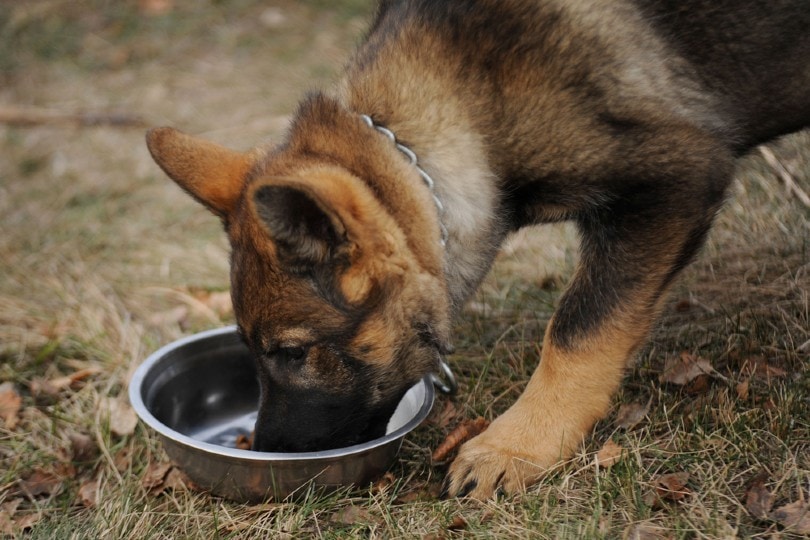
Bolting is an eating disorder that can cause severe complications in dogs. Dogs with this condition consume their food so quickly that it isn’t chewed properly, nor does it have time to digest. You may notice your dog vomiting what looks like the whole, undigested kibble right after eating.
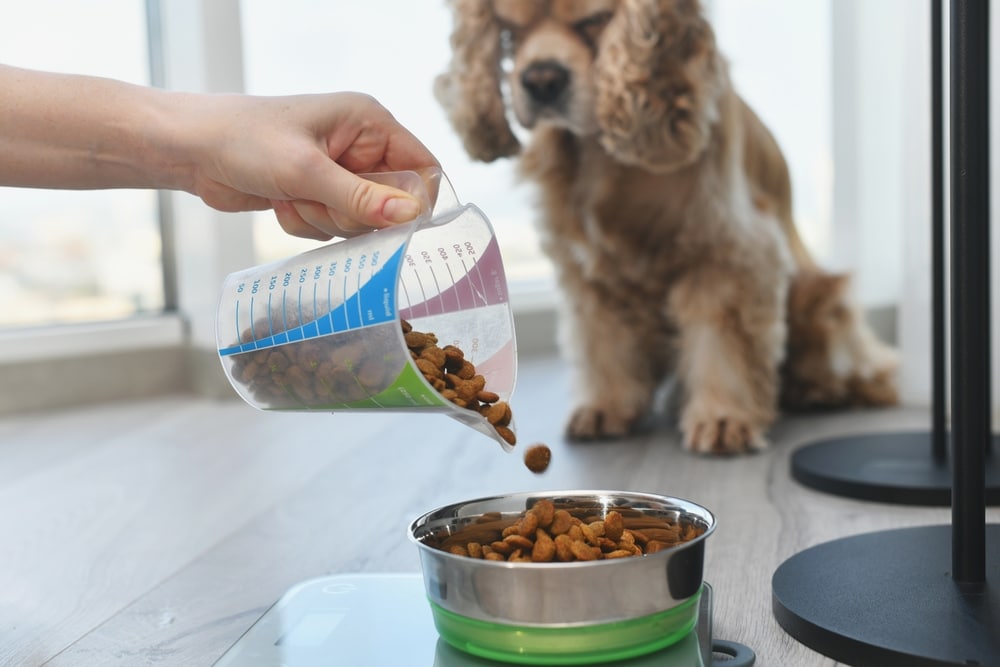
Large, deep-chested dogs with this eating disorder can swallow large quantities of air while bolting food. This may cause GDV or bloat, a life-threatening emergency in dogs. Slow feeders can help in decreasing bolting behavior. You can also try feeding small, frequent meals to lower your dog’s bloating risk.
6. Pica

| Common Signs: | Eating non-food items |
| Treatment: | Increased physical and mental stimulation, medication |
Pica is an unusual eating disorder where dogs regularly consume inedible items. While dogs of any age chew on and sometimes ingest parts of items like sticks or plastic toys, those with pica may compulsively chew or eat strange objects. This eating disorder is dangerous because the dog may eat poisonous or large items that cause a blockage in the intestines.
Pica can have behavioral and medical causes, and dogs with nutritional deficiencies may develop pica. Anxiety and boredom can also cause the disease. In rare cases, pica may be a compulsive behavior, but it is more common in cats
What to Do If You Suspect Your Dog Has an Eating Disorder
As we’ve learned, eating disorders in dogs can have medical and behavioral causes. The first step if you suspect your dog has an eating disorder is determining what is causing it. Make an appointment with a veterinarian to diagnose or rule out medical conditions first.
Keep in mind that diagnosing the medical cause of an eating disorder like anorexia can be complicated because there are so many potential culprits. A veterinarian may need to run blood work and imaging or refer you to an internal medicine specialist for more advanced tests.
If medical conditions are ruled out, a vet can help you get to the bottom of your dog’s behavioral issues. Some behavior issues can be solved by simple changes like increased exercise or spending more time with your dog. Others may be more complex and require medication or the expertise of a certified dog behaviorist.
Conclusion
Eating disorders in dogs may not be as emotionally complex as in humans, but they can still be difficult to diagnose and treat. If your dog is suffering from any of these eating disorders, work closely with a veterinarian as you diagnose and treat them. Don’t be afraid to ask questions or seek additional help during the process. Dealing with a sick dog is an emotional situation, and you’ll want as much support as possible.
Featured Image Credit: Daria Lixovetckay, Shutterstock
 The 6 Eating Problems That Can Affect Dogs













2 Responses
Interesting article. My 4 yo miki, rescued breeder- so to speak. Now has changed eating at the front door , waiting for people or dogs to go by then eats , usually gulps food down.
Where we live, WNY, winter is coming and the door will not be open.
Have been back and forth with our vet. Klondike has been in and out of hospital for several suspected reasons. Liver issues were one. But ultra- sound of internal organs all came back normal. Slight gastritis was noted.
He has been with us for a year, was eating at first. He was underweight when he came to us. Has gained weight, coat is healthier. Has been through many , many tests in Hosp and with present vet.
All negative findings.
Klondike is on medication for reflux and gastritis : carafate, slippery elm and famotadinel small amount. Just restarted, due to bile emesis. Which he had when he came to us.
We are at a loss.