In this article
View 5 More +You’re reviewing your pup’s latest lab results from their annual exam, and you see a value flagged as abnormally high: cholesterol. What kind of problems can high cholesterol cause for your dog, and what can you do about it?

What Is High Cholesterol in Dogs?
High cholesterol is also called hypercholesterolemia, also referred to as hyperlipidemia. With this condition, your dog has higher-than-normal levels of triglycerides or fats circulating in its bloodstream.
Cholesterol is a fatty molecule that is essential for many normal body processes. For example, your dog’s body uses cholesterol molecules to make hormones and even create new cells. Both you and your dog’s bodies need triglycerides to form the permeable cell membranes that surround all living cells.
The normal range for cholesterol in dogs is 120 to 270 mg/dL.1
What Are the Signs of High Cholesterol in Dogs?
While many dogs don’t have clinical signs from elevated cholesterol levels, some may have ophthalmic changes, gastrointestinal issues, or even neurologic problems.

Ophthalmic Changes
Dogs with high cholesterol are prone to developing lipid spots on their corneas, often visible to the naked eye as white spots. Excess lipids can also accumulate within the aqueous humor of the eyes and lead to inflammation.
Gastrointestinal Changes
Vomiting and diarrhea are possible in dogs with hyperlipidemia. These dogs are also at a higher risk of developing pancreatitis, which is a severe and potentially life-threatening condition.
Other Changes
- Dogs with hyperlipidemia may start to have seizures.
- Atherosclerosis is less common in dogs than in people, but it is possible. These animals are at a higher risk for serious cardiovascular problems like strokes and heart attacks.
- Some dogs with high cholesterol develop skin changes, such as hair loss.
What Are the Causes of High Cholesterol in Dogs?
Dogs develop high cholesterol for several possible reasons.
Hereditary
Some dog breeds are predisposed to having higher cholesterol. While veterinarians commonly think of Miniature Schnauzers as representing this category, other breeds can be affected, including:

Postprandial
Postprandial refers to after eating. Often, dogs have elevated cholesterol levels after eating a meal, especially if it’s a fatty meal. This cause is usually transient.
Medication
Certain medications that our dogs take can increase their triglyceride levels. Steroids like prednisone or prednisolone are commonly implicated.
Acquired
Some health issues affecting our dogs can lead to high cholesterol. These conditions can affect your dog’s metabolism, leading to higher-than-normal cholesterol levels. These diseases include:
Consulting a veterinarian is recommended for the best course of action.
If you need to speak with a vet but can't get to one, head over to PangoVet. It's our online service where you can talk to a vet online and get the advice you need for your pet — all at an affordable price!

Diagnosing High Cholesterol in Your Dog
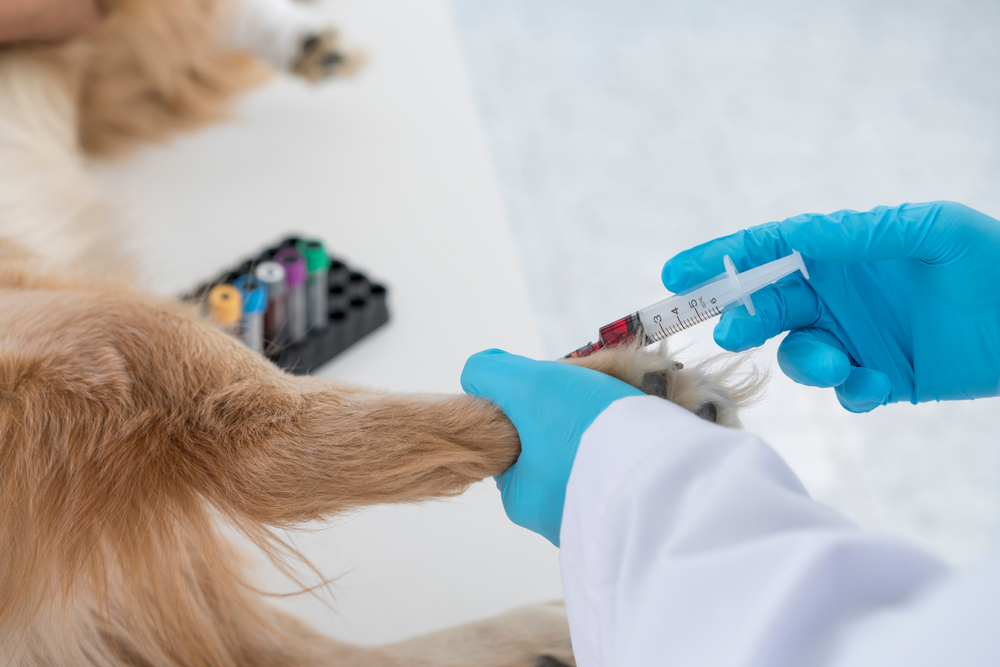
Your dog may or may not be symptomatic for high cholesterol, which is one of the many reasons routine blood work is vital to its health. Your veterinarian may see elevated cholesterol levels on your dog’s blood work, generally on an organ function panel. Typically, in this case, the first thing to do is have the dog fast for 18 hours and repeat the bloodwork to see if the cholesterol is still high.
If the cholesterol on the fasted sample is normal, your veterinarian might suggest dietary management. However, if the sample is still elevated after fasting, more evaluation may be necessary. For instance, your veterinarian may investigate to look for evidence of Cushing’s disease or hypothyroidism.
How Do I Care for a Dog With High Cholesterol?
Dogs with high cholesterol typically need a diet change. Your dog should go on a low-fat and high-fiber diet. Some options include:
If your dog has other health conditions that require a specific diet, your vet might need to consult with a veterinary nutritionist. If your dog has an underlying condition like Cushing’s disease, your veterinarian will start treatment. Certain medications, like Trilostane for Cushing’s disease or insulin for diabetes, could be warranted.
Weight management is often essential in managing your dog’s high cholesterol. You’ll want to feed an appropriate number of calories. Your veterinarian can help you determine how much you should be feeding.
It’s never fun when our pets seem hungry and pester us for more food. Those puppy dog eyes can sometimes get even the strictest of us. To provide mental enrichment, you can draw out your dog’s meal using a dog puzzle toy.
Increasing your dog’s activity is also essential. Longer walks are great for many pets, but you could also look at other activities such as flyball, dock diving, and agility.
Fish oil supplements are used for many reasons in veterinary medicine. They can decrease inflammation, which might be helpful for dogs with allergies or arthritis. Fish oils may also be beneficial for lowering high cholesterol levels. Veterinarians don’t usually prescribe medications to lower your dog’s cholesterol unless it is significantly elevated. Some of these possible medications are:
- Bezafibrate (Bezalip)
- Atorvastatin (Lipitor)
- Gemfibrozil (Lopid)

Frequently Asked Questions (FAQ)
Is my dog’s high cholesterol cause for concern?
While high cholesterol doesn’t tend to cause the severity of issues in dogs as it does in people, it should still be addressed. For many pets, dietary management is the primary way to lower cholesterol to a more normal level. Low-fat foods, such as Royal Canin Gastrointestinal Low Fat, are ideal.

What is normal cholesterol for a dog?
According to DVM360, the normal range for a dog’s cholesterol is 120 to 270 mg/dL.
Conclusion
If your dog’s blood work shows high cholesterol levels, it warrants further investigation. First, your veterinarian will likely want a fasted sample to check again. They’ll also review your dog’s history to see if any foods or medications could contribute to the high cholesterol levels. Treating underlying conditions like hypothyroidism and dietary management are the most common ways to treat high cholesterol.
Featured Image Credit: HelgaBragina, Shutterstock