Get

In Your Inbox

Dogster is reader-supported. When you buy via links on our site, we may earn an affiliate commission at no cost to you. Learn more.

What Is a Good Fat-to-Protein Ratio for Dog Food? Facts and FAQ

Share

pouring pet food into a bowl

You may have seen values relating to the fat-to-protein ratio (FPR) of your dog’s diet and wondered what this tells you. Is it a helpful indicator of the quality of their diet?

The FPR (which is normally expressed as a percentage) is sometimes used to give rough guidance on the levels of lean meat in dog food compared with fatty ingredients. The average FPR range for dog food should on average be between 50% and 80%, but it is generally used to look for outliers. The number shouldn’t be taken literally and it should only be used alongside more important information such as the actual amounts and types of fat and protein.

Let’s look into this in more detail to help you assess the nutritional content of your dog’s diet.

Dogster_Website dividers_v1_Jan 18 2024-01-TEST

What Is the Fat-to-Protein Ratio?

The ratio of fat and protein is more commonly used by the dairy industry to assess the nutritional composition of milk, and as an indicator of the cows’ energy balance. This helps dairy nutritionists to evaluate whether their diet is meeting their energy requirements. It can also be used in the meat industry to compare the amount of fat and proteins in different cuts of meat.

In dog food, the FPR is sometimes calculated to help detect excessive amounts of fatty meat and used as one way to assess the quality of the ingredients in the diet. It is normally calculated as a percentage. The higher the FPR, the more likely the food is to contain more fatty ingredients. The average FPR for wet and dry dog foods is around 55–65%. The general rule is to avoid foods with an FPR higher than 90%.

What is more important, however, is knowing that the dog food you chose contains the correct quantities of a high quality, digestible protein source which contains all the essential amino acids dogs need, and the right amount of essential fats.

owner feeding the shih tzu dog
Image Credit: chaossart, Shutterstock

How to Calculate the FPR of Dog Food

  • Look at the nutritional content label on the dog food package.
  • Write down the crude fat and crude protein numbers from the guaranteed analysis.
  • Divide the fat by the protein.
  • Multiply the result by 100 to get the FPR expressed as a percentage.

Why Does the Amount of Fat in Your Dog’s Food Matter?

Fat is an important, but often misunderstood, part of a healthy balanced diet. It has many important roles in your dog’s body including providing energy and insulation. However, all types of fat are not the same. Different fats are made up of different fatty acids and some types of fatty acids have particular health benefits. Omega-3 and omega-6 are essential fatty acids that dogs cannot make on their own and so must get from their food in the right quantities.

Both too much and too little fat can cause health issues in dogs. The ideal amount of fat in a dog’s diet will vary depending on many factors. Growing puppies, pregnant or lactating dogs, or extremely active dogs (e.g. hunting and sled dogs), will need higher fat levels.

Fat is high in calories and so an excess in the diet can lead to weight gain and obesity. High fat diets can also cause gastrointestinal issues such as vomiting and diarrhea and can lead to pancreatitis. Therefore dogs that are prone to gastrointestinal issues or pancreatitis, or those that are diabetic or suffer from hyperlipidemia, usually benefit from lower-fat diets.
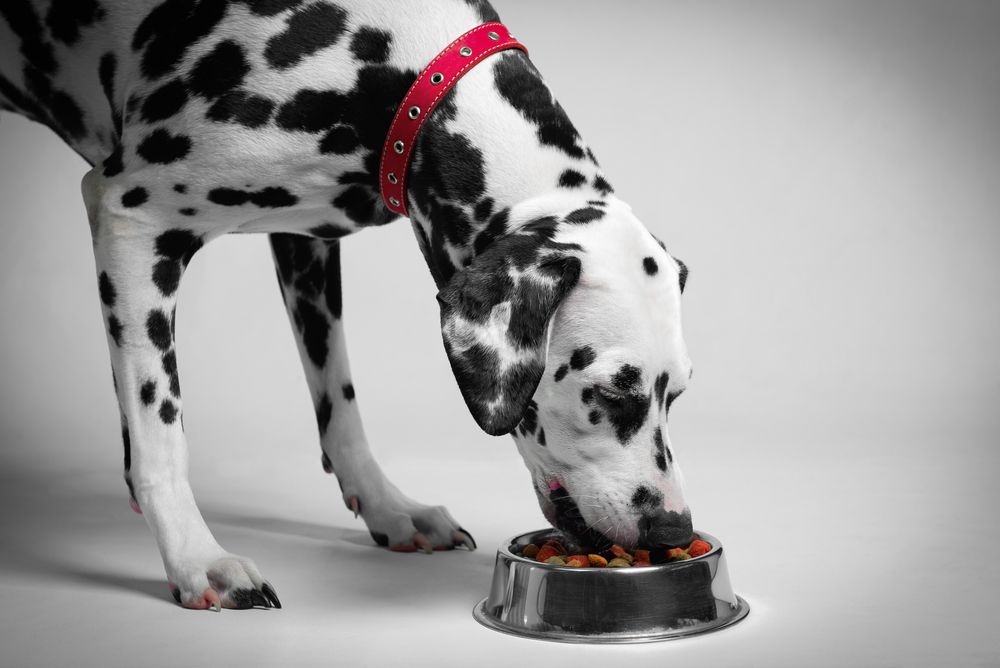
Dalmatian eating dry dog food
Image Credit: Sergey Fatin, Shutterstock

What Are the Right Amounts of Fat and Protein for my Dog?

Pet food labels contain a lot of information and we know it can be hard to make sense of it all. Firstly look for diets labeled as “complete and balanced”. The term “complete” means that the product contains all the nutrients a dog needs to support its daily life when fed as directed.

The Association of American Feed Control Officials (AAFCO) nutritional adequacy statement will also tell you what life stage the food has been approved for. In order for a food to be marketed as “complete and balanced” it must meet or exceed the AAFCO nutrient profile.

The AAFCO nutrient profile states that dog diets should contain a minimum of 22.5% protein (based on dry matter) for growth and 18% DM for maintenance. The AAFCO minimum crude fat level for growing puppies is 8.5%, and 5.5% for adult dogs.

So the individual requirements for your dog will vary depending on their age, activity levels, and their health status. It’s always best to consult with a veterinarian when trying to figure out the best nutritional plan for your dog.

If you need to speak with a vet but can't get to one, head over to PangoVet. It's our online service where you can talk to a vet online and get the personalized advice you need for your pet — all at an affordable price!

PangoVet_Mention-in-Content Savings V1

Dogster_Website dividers_v1_Jan 18 2024-01-TEST

Conclusion

You can calculate and look at the fat-to-protein ratio of your dog’s food to give you a very rough indicator of the quality of the nutrition, and to help avoid an excess of fatty ingredients. Don’t take this value literally or on its own, though. Always take into consideration other more important factors such as the actual amount and types of protein and fat in the diet. Your vet will always be happy to advise and guide you when choosing the right levels of fat and protein for your dog based on their age, health, and activity level.


Featured Image Credit: Rawpixel.com, Shutterstock

Want content like this delivered to you?

Sign Up For Our Newsletter

News, insights, expert advice, and everything dog

* By submitting, you agree to our Terms & Conditions and Privacy & Cookies Policy.


How useful was this post?

Click on a star to rate (you can leave written feedback after clicking submit)

Help us improve Dogster for pet parents!

Your feedback really matters.

What did you like about this post? Also how can we improve it?

Join the conversation

Leave a Reply

You’re very welcome to leave a comment or question. Please know that all comments must meet our community guidelines, and your email address will NOT be published. Let’s have a positive and constructive conversation.


Dogster's Digital Magazine is Back!​

Dogster Magazine Cover June 2026

Vet-approved health & behavior advice

Real dog stories & community features

Ask Dr. Paola- Help! My Vet Suggests a Biopsy for My Dog! (June 15, 2026)

Welcome to our “Ask Dr. Paola” series, where every Monday we bring expert advice straight from Dr. Paola Cuevas (MVZ) to help our...

Why Some Dogs Treat Mealtime Like Playtime – And When to Pay Attention

Most dogs are reliable eaters. Bowl goes down, food disappears. So when a dog starts batting kibble across the kitchen floor, tossing pieces...

Major Win for Dogs: Ontario Becomes the Final Province to Ban Ear Cropping and Debarking

​​Ontario has approved new animal welfare regulations that will prohibit elective ear cropping and devocalization (debarking) procedures in dogs from January 1, 2027....

Dogster’s Weekly Photo Contest Winners: Most Adorable Puppy (June 8, 2026)

Every week our team gets the privilege of sorting through our readers photos to choose what dogs will win this weeks contest! See...

More related

Peruvian Inca Orchid Dog Breed: Info, Pictures, Facts & Traits

The Peruvian Inca Orchid might sound like some kind of exotic flower, but it’s actually the name of an interesting dog! This breed...

Why Is My Dog Dragging Their Butt? Vet-Verified Scooting Explanation & Remedies

Some aspects of pet ownership aren’t pleasant. After all, the good comes with the bad. Dogs scooting their butts is an example of...

Caesarean Sections in Dogs: Vet Approved Info & Care Tips

Cesarean sections are an operation whereby an incision is made in the abdomen and womb and the baby, or puppy, is delivered through...

12 Japanese Chin Mixes (With Pictures)

The Japanese Chin is a dog with an extensive history throughout Asia. Over the last hundred years or so, these adorable pups have...

Keep reading

12 Best Canned & Wet Dog Foods in 2026 – Reviews & Top Picks

Feeding our dogs is part of a billion-dollar business. In fact, in the U.S. alone, $42 billion was spent on pet food and treats this year! We all know how vital food is for pets, so finding the right food...

shih tzu dog getting wet food from owner at kitchen

Canidae Dog Food Review 2026: Recalls, Pros & Cons

Review Summary   Aimed at dogs of all shapes, sizes, and ages, Canidae dog food has been around since 1996 and is one of many high-quality brands available for pets throughout the U.S.A. With its focus on sustainable and regenerative...

Dogster_Canidae Dog Food Review

Can Dogs Eat Rice Cakes? Vet-Verified Nutrition Facts & FAQ

Rice cakes are a very popular snack that is often used as a lower-calorie alternative to bread, crackers, and chips. Since we frequently find ourselves wondering what foods in our pantry are safe for our dogs to eat, it’s important...

Can Dogs Eat_Rice Cakes

Evolve Dog Food Review 2026: Recalls, Pros & Cons

Review Summary If you’re looking at different food brands, and trying to decide what would work best with your pooch—let us introduce you to Evolve. It can work very well for the right canine, and we want to explain what...

Dogster_Evolve Dog Food Review

11 Best Limited Ingredient Dog Foods in 2026 – Reviews & Top Picks

Limited-ingredient dog foods can be a lifesaver for dogs with allergies. Because they contain few ingredients, there is less of a chance that dogs with allergies will react to them. However, even if your dog doesn’t have allergies, they may...

dog eating scattered food

Can Dogs Eat Cream Cheese? Vet-Verified Facts & Health Tips

Whether it’s breakfast, lunch, or dinner, there’s a good chance your pup is hanging out by your side when you’re eating, and they’re just hoping you’ll share. But while your pooch might want everything on your plate, that doesn’t mean...

Can Dogs Eat Cream Cheese

5 Dog-Friendly Burrito Recipes You Can Make Today (Vet Approved)

Did someone say burrito? Burritos have become a desired cuisine in the U.S., and we’re sure no dog would turn their nose up at the chance for a taste. However, burritos cooked for humans are not particularly friendly for dogs,...

Dog-Friendly Burrito Recipes You Can Make Today

Canidae vs. Blue Buffalo Dog Food: Pros, Cons & What to Choose

Staring at the solid wall of pet food offerings in a store is overwhelming and confusing all at the same time. Maybe you have passed the pet food aisle during a grocery trip and found yourself mesmerized by the sheer...

Dogster_Dog Food Canidae VS Blue Buffalo

Love Dogs? So Do We! Join the Dogster Community

Stay informed with expert pet care insights delivered straight to your inbox! Discover professional guidance on animal behavior, feeding tips, trusted product picks, and much more.


Sign up for the Dogster Email Newsletter