


Apart from hilarious video clips and adorable photos, one of the main reasons dog owners turn to the internet is to make sure their dog is okay. Of course, there is no substitute for a physical examination by a vet, but what if you are just wanting some reassurance that your dog is healthy? Every dog is different, and what is normal for one may be a sign of a problem for another, so it’s important to be familiar with your dog’s healthy normal. Plodding along and sleeping 16 hours a day can be perfectly normal for one dog but a sign of serious illness in another, and often the most important sign of a problem is a deviation from the norm.
A great way to stay on top of your dog’s health is to ask your vet to help you create a record of their normal, healthy parameters. That way, you’ll have a personalized baseline that will help to alert you to any changes. Use a table like this one, plus photos of their eyes, gums, or any other features, that you can use as a reference.
| Name | D.O.B. | ||
| Weight | Ideal weight | ||
| Heart rate | (bpm) | Respiratory rate | (bpm) |
To help you keep on top of your best friend’s health, we’ve compiled this list of 12 Ways to Tell If Your Dog Is Healthy. This is not a substitute for veterinary advice, but it can help you assess your dog’s health and recognize any problems.

The 12 Ways to Tell If Your Dog Is Healthy
1. Talk To A Vet
If there is something that is worrying you about your dog, the safest thing to do is to consult a vet. You can make an appointment at your local veterinary practice, or if you would like some guidance and advice without leaving home, you can always schedule an online appointment with a reliable televet service, such as PangoVet, where you can speak to a qualified veterinarian about your dog’s health. They can discuss your concerns and help you decide if your dog needs to be seen for a physical examination or provide reassurance if your dog is healthy.
If you need to speak with a vet but can't get to one, head over to PangoVet. It's our online service where you can talk to a vet online and get the advice you need for your dog — all at an affordable price!

2. Demeanor
When we assess a patient, we use terms like:
- Bright, alert, and responsive (BAR)
- Boisterous
- Excitable
- Dull, depressed
- Subdued
- Agitated
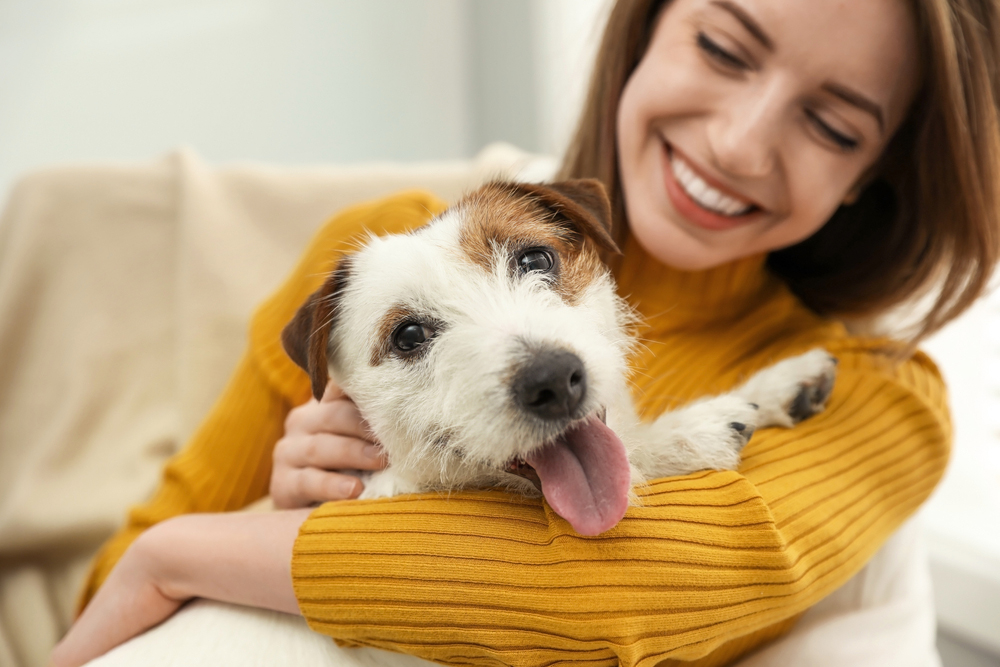
These terms can be applied to your pet as well, but you don’t need to be too clinical. If your dog is as lively, friendly, quiet, or active as they usually are, this is a good indication that they are healthy. A normally lively dog acting subdued can be a clear sign of a problem, as can a dog that enjoys a lazy lifestyle suddenly being up and pacing around. Friendly dogs becoming aggressive, or independent dogs becoming clingy, can also tell us that something isn’t right.
One of the most challenging descriptions to hear from owners is that their dog is “just not him/herself,” but this can also be one of the most important early indicators of pain or illness. Never ignore or underestimate the significance of a change in your dog’s demeanor.
3. Heart Rate
Your dog’s heart rate will change in response to a number of factors, and some are normal but others are a sign of illness, so it’s good to be aware of what your dog’s resting heart rate should be in order to assess any changes.
There are a few places that you can use to check your dog’s heart rate:
| Carotid artery – located in the jugular groove, either side of the trachea (windpipe) on the neck. | 
|
| Chest wall (left side) – on lean dogs, you should be able to feel (or even see) your dog’s heart beating under their ribs around where their elbow is when they are standing. | 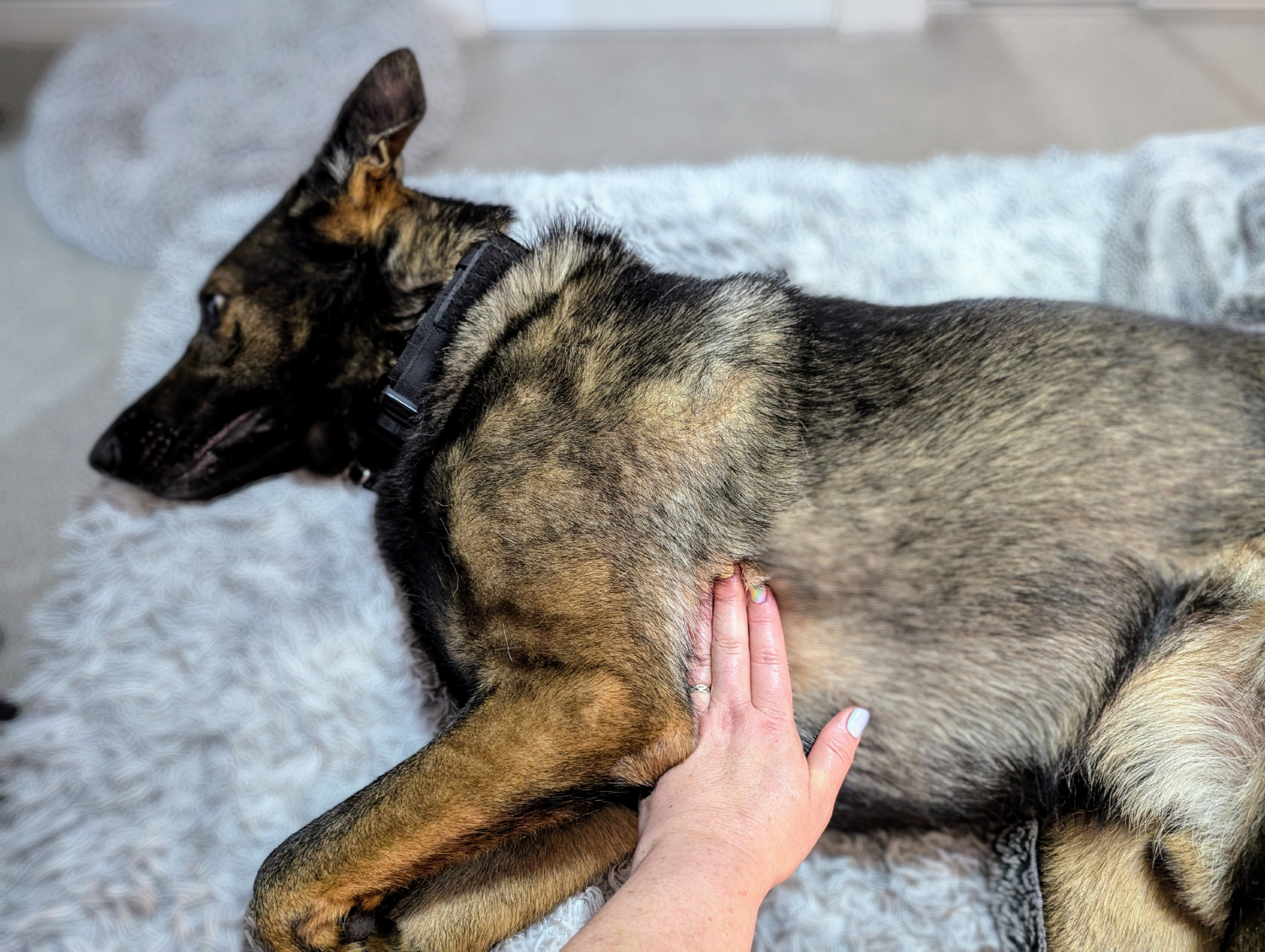
|
| Femoral artery – this can be felt when your dog is standing up or lying down. Place your fingers in the groove between the thigh muscles just below your dog’s groin. Make sure your dog is comfortable with your hands in this area first! | 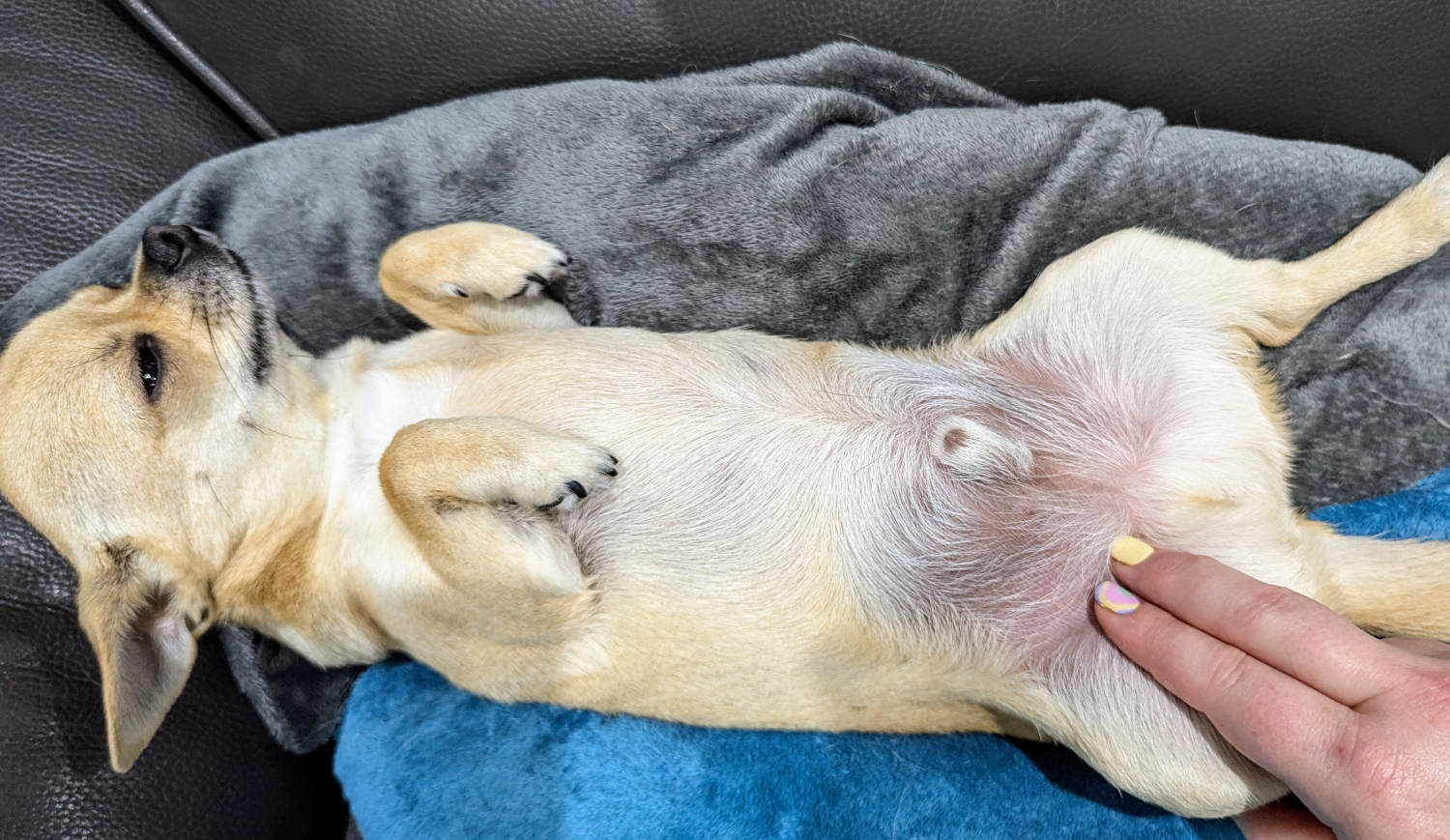
|
Heart rate generally decreases as the size of the dog increases, but things like obesity can also influence this. You can use the following table as a guide:
| Dog size | Normal resting heart rate (bpm) | |
| Toy | < 12 lbs | 120 – 160 |
| Small | 12 – 25 lbs | 100 – 120 |
| Medium | 25 – 50 lbs | 80 – 100 |
| Large | 50 – 75 lbs | 70 – 100 |
| Giant | > 75 lbs | 50 – 80 |
Below are some of the more common ways that your dog’s heart rate may be increased or decreased:
| Increase | Decrease |
|
|
4. Respiration Rate
The number of breaths your dog takes in a minute will change multiple times throughout the day, so the most reliable time to measure this is when your dog is asleep. Respiration rate does tend to be a little faster in smaller dogs compared to large ones, but does not vary as significantly with size as heart rate.
The normal resting respiratory rate for dogs is 15 – 30 bpm.

5. Eyes
Some say the eyes are the window to the soul, but they can also tell you a lot about health and well-being. Your dog’s eyes can give you an idea of how they are feeling and whether or not they are dehydrated, as well as provide insight into some serious health conditions. Some factors to consider when assessing your dog’s eyes include:
- Are they bright and clear? Dull or cloudy?
- Are they whites of the eye (sclera)
- really white?
- pink/red?
- yellow?
- Are they sunken? Is there a gap between the globe (eyeball) and the eye socket?
- Are the eyes equal in size and position?
- Are the pupils equal in size and position?
- Is your dog squinting or avoiding bright light?
- Are there any changes to the pigmentation of the iris?
Even subtle changes can indicate a problem, and the more information you can give your vet, the better.
6. Gums
Healthy gums should be salmon pink and feel moist to the touch. Many dogs have dark brown or black pigment on their gums, making this a little harder to assess, but you should be able to find an area without pigmentation to use. Like the eyes, changes in the gums can give us quite a lot of information:
| Dry or tacky | Dehydration |
| Pale, white | Hypotension (eg. low blood pressure, shock, anemia) |
| Slow capillary refill time (CRT) | Hypotension (eg. low blood pressure, hemorrhage) |
| Blue or purple tinge | Hypoxia (low blood oxygen) which may be due to cardiorespiratory disease and some toxins |
| Yellow | Icterus/jaundice indicates hepatic (liver) disease or hemolysis (damaged blood cells) |
| Dark pink/red | Endotoxins/sepsis (eg. gastric or intestinal obstruction, peritonitis) |
| Red spots/patches | Clotting problem |
How to check your dog’s CRT:
Find a pink area of the gum and carefully push your finger against the gum so that it blanches white. Measure how long it takes for the color to return.
Normal CRT is around 1-2 seconds.

7. Movement and Posture
Changes to your dog’s gait (how they walk), posture, how they get up and down, and how easily they move can give us lots of information, not just about their muscles, bones, and joints, but also about the health of their internal organs and neurological system.
A hunched back could be due to a spinal issue, or it could be an indication of abdominal pain. Difficulty standing up and moving around could be caused by arthritis, weakness, or a neurological problem.
Dogs are very good at masking signs of pain, so even subtle changes in movement and posture should be taken seriously.
8. Appetite
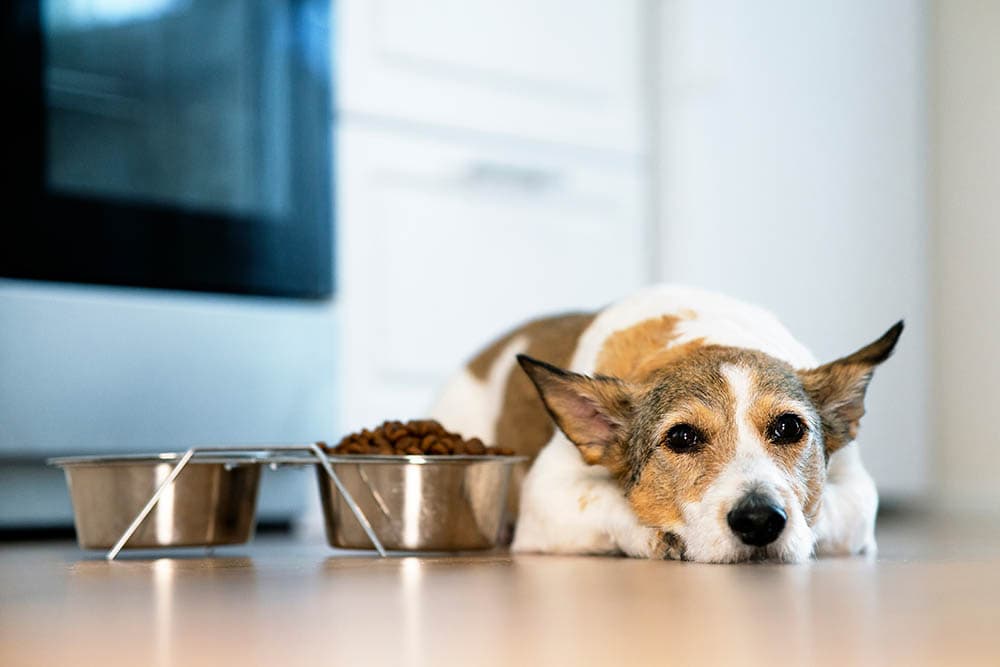
A normal appetite isn’t a guarantee that everything is okay, but it is a good indicator of how your dog is feeling. Some dogs will go off their food in response to a minor inconvenience, whilst others (I’m looking at you, Labradors) would keep eating even if all four limbs were missing. Okay, this might be a slight exaggeration, but I’m sure you get the point!
While skipping the odd meal here or there is rarely cause for concern, a regular or persistent change in appetite should be addressed, even if this is an increased appetite.
And if your dog is having trouble keeping food down, they should certainly be checked by a vet.
9. Feces
All dogs will have the occasional bout of diarrhea, but in general, a healthy dog should be producing formed feces at regular intervals. Your dog’s normal will be determined by their metabolism, the type of food they are eating, and how often they are fed.
While some dogs will have firmer poops than others, all dogs should be producing feces that are formed and pick-upable, but not rock hard and dry. If your dog’s normal doesn’t fit into this description, it’s worth talking to your vet.
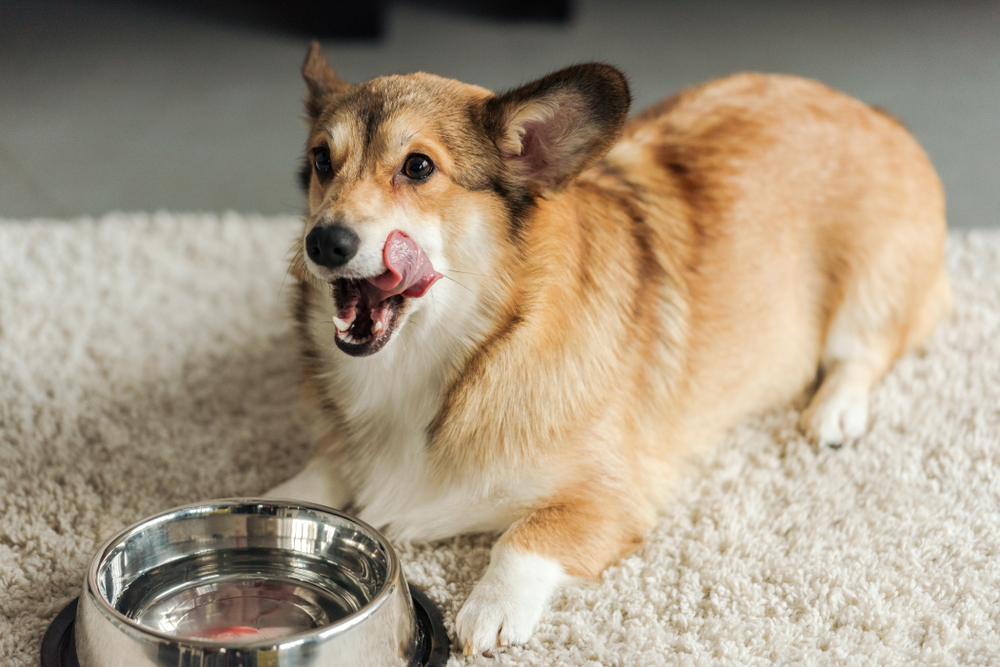
10. Drinking and Urination
How much and how often your dog passes urine is also influenced by their diet and drinking habits, so these two tend to go hand in hand. Changes in the volume, color, smell, and frequency of urination can be the result of a change in diet, infection, bladder stones, cancer, kidney disease, or endocrine diseases like diabetes or Cushing’s disease.
Sometimes dogs will drink more water due to higher temperatures or a change in their food, but the conditions above will also result in an increase in water intake.
It can be very useful to measure how much water your dog drinks during a 24-hour period, and if you’ve got an appointment with the vet, try to collect a urine sample before you go.
11. Teeth
Our dog’s dental health is often forgotten until there is a problem. It’s important to get into the habit of checking your dog’s teeth regularly for signs of disease. Some dogs are more amenable to this than others, and it is something you should practice with your pup from a young age. For less cooperative dogs, try using a toy or some food to get them to open up so you can visually assess their mouth.
Smelly breath, drooling, dropping food, or only using one side of the mouth to chew are all potential signs of dental disease, which are too easily and often ignored.
12. Tender spots
As part of your daily doggy cuddles, be sure to run your hands over your dog’s body, limbs, and tail, checking for any areas of pain, tenderness, lumps, or bumps. While minor niggles will often turn out to be nothing, catching something early could save your dog’s life.

Conclusion
It’s normal to worry about the health of your dog, and sometimes we just need reassurance that everything is okay. If you’re looking for a more systematic way to assess your dog’s health at home, hopefully, the points above will give you the guidance you need. Remember that talking to your vet about any concerns you have will always be the best and most important step you can take to make sure your dog is happy and healthy.
Featured Image Credit: Harbucks, Shutterstock
 The 12 Ways to Tell If Your Dog Is Healthy








One Response
Very helpful and well-structured article. The points about subtle behavior changes and daily observation are especially important, as many owners only notice problems when symptoms become obvious. We’ve seen similar patterns while researching overall dog health indicators, particularly in large and strong breeds where issues can be easily overlooked early on.