In this article
View 6 More +If your dog hasn’t passed feces today or seems to be having trouble defecating, you may want to learn more about constipation in canines. Constipation is a sign of disease rather than a disease process in itself. It can be acute or chronic, with chronic cases tending to have more serious underlying causes. The signs of constipation can also be similar to other problems. Nevertheless, there are treatments available to help your dog, and this article will go through some of the possibilities.

What Is Constipation?
Constipation is a non-specific sign referring to the reduced or difficult passage of stool for several underlying reasons. When constipation in dogs is severe, the extreme build-up of firm feces can lead to an intestinal obstruction, known as obstipation, which causes dogs to become extremely unwell. Dogs can even die from complications of severe constipation.
When feces sit in the colon longer than normal, the colon spends more time absorbing water, leading to the stool drying out and becoming even more difficult to pass. This is why chronic cases of constipation are likely to lead to obstipation.
Megacolon refers to a weak and dilated colon. It can be a primary disease but can also occur after long-term constipation/obstipation due to the weakening of its ability to contract after being stretched. Dogs with megacolon, then, can become chronically constipated. One study looked at dogs with megacolon and found that feeding bone meal and low levels of exercise were significantly associated with the disease.1 A surgical procedure called a subtotal colectomy, where part of the colon is removed, was effective in managing the condition long-term.
What Are the Signs of Constipation?
Now that you know how serious constipation can be, you want to look out for the signs of it.
- Rectal discomfort (they will scoot or lick their bottom)
- Straining to defecate
- Producing less feces than normal
- Firm or dry feces
- Small amount of liquid feces, as this is all that can get past the built-up feces
- Crying out when defecating
- Hunched posture
- No defecation for more than a couple of days
- Abdominal pain
- Vomiting
- Inappetence
- Dehydration
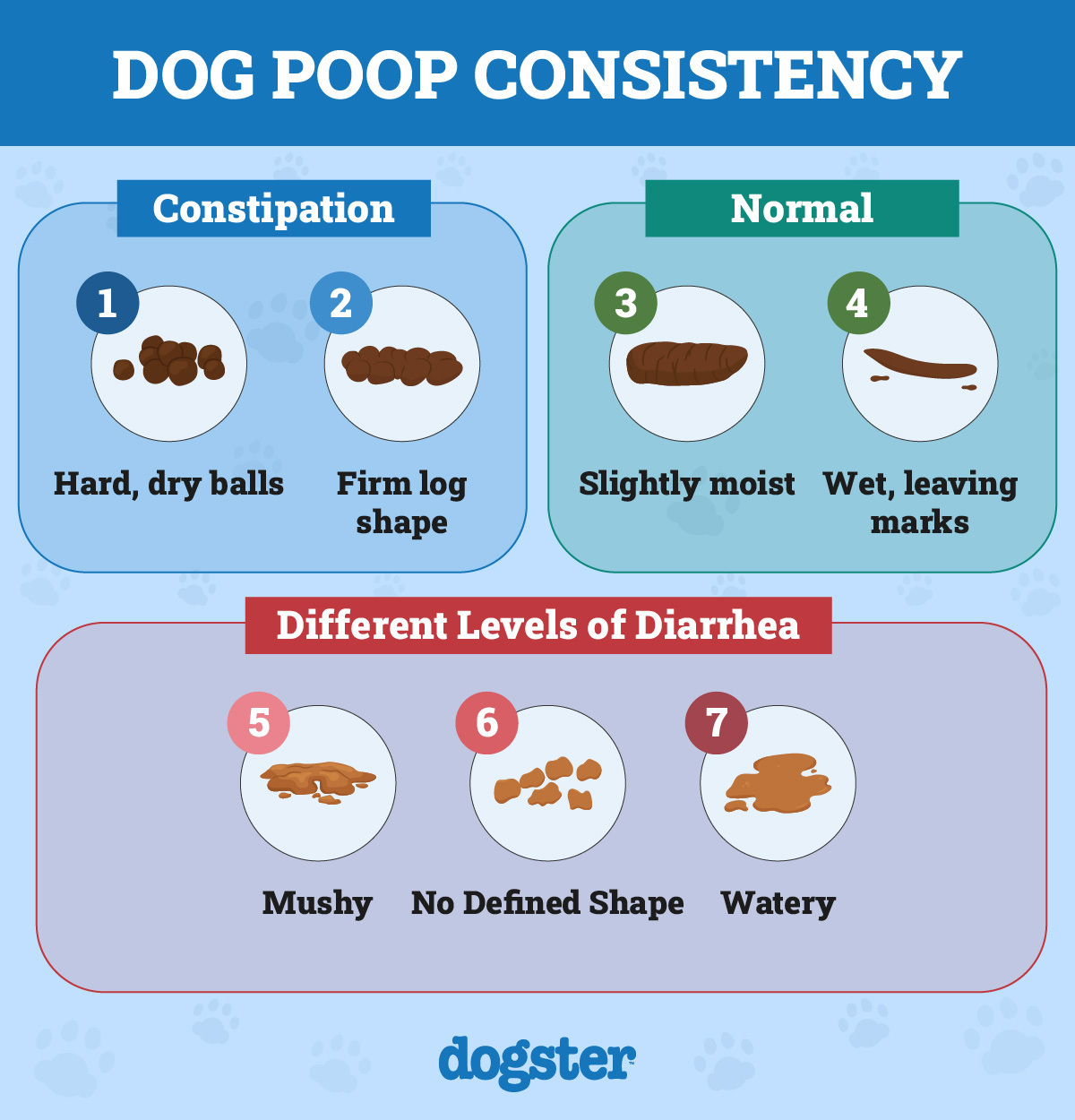
Some people understandably get confused between constipation and diarrhea, as some of the signs can be similar. To help you determine if your pet has constipation or diarrhea we have created a handy chart.
| Constipation | Diarrhea | |
| Stool consistency | Usually very firm, sometimes a small amount of liquid stool can be passed | Always soft to watery |
| Stool volume | Always reduced | May be small or large amounts more frequently |
| Straining | Present | Can be present |
| Rectal discomfort | Present | Can be present |
| Vomiting | Present in severe cases | Can be present, usually before diarrhea starts |
| Abdominal pain | Present in severe cases | Present in severe cases |
The 6 Causes of Constipation
Constipation usually has an underlying cause, which can be simple or complicated to treat. We can break down the causes into a few different categories.
1. Reduced Intestinal Motility
Food is moved along the digestive tract by peristaltic movements. Think of this as a “stadium wave” contraction from one end of the intestine to the other. When the normal peristaltic movements of the intestines are reduced, animals can become constipated. This can result from dehydration, electrolyte imbalances, and the side effects of certain medications.

2. Structural Constipation
Structural constipation is due to a physical blockage of feces by something inside or outside of the intestine. Strictures are narrowed areas in the pathway, which usually occur due to scar tissue. Cancers, enlarged prostates, and enlarged lymph nodes are structural abnormalities that can lead to constipation.
Also, foreign objects or non-digestible material can form a blockage inside the intestine which can contribute to constipation.
3. Behavioral
Anxiety can lead to constipation due to the physical effects of stress. Sometimes, dogs that have pain when defecating will choose to hold their feces to avoid pain. Back pain, anal gland abscesses, and rectal surgery can cause pain when defecating and can lead to constipation.

4. Lifestyle
Lack of exercise and obesity can predispose a dog to becoming constipated. A low-fiber diet can also lead to constipation. Commonly, constipated dogs have eaten something that they aren’t able to digest, like rocks, hair, or bones. These materials can aggregate or be difficult for the dog to pass.
Believe it or not, poor grooming can also lead to constipation. In dogs with fairly long hair, feces can matt the hair and form a solid barrier over the anus, meaning the dog is unable to pass feces.
5. Side Effects of Medication
Certain medications cause constipation through a few different mechanisms. If your dog has been prescribed opioids (e.g., codeine), antihistamines (e.g., chlorpheniramine), diuretics (e.g., frusemide), or the gastro-protectant sucralfate, constipation could be a side effect. You should contact your vet as soon as possible to discuss the best course of action for your dog.
If you need to speak with a vet but can't get to one, head over to PangoVet. It's our online service where you can talk to a vet online and get the advice you need for your pet — all at an affordable price!
6. Other Diseases
Other diseases can lead to constipation. Nerve problems around the pelvis and sacral spine can affect the nerves supplying the colon. Hormonal diseases like thyroid disorders affect the nerves and muscles controlling the colonic movements. Kidney disease can lead to dehydration and electrolyte abnormalities, as well as other issues that can lead to constipation.
How Do I Care for a Dog With Constipation?
Firstly, you will need to take your dog to the vet for treatment. You should book the appointment at the first sign of constipation. However, constipation is not usually an emergency straight away. Your vet should be able to give you advice over the phone about your pet’s condition and whether they think they can wait for an appointment or if they need to go to the emergency clinic, as well as if you can do anything to help them while you wait for the appointment. However, if your pet is in pain, not eating, or vomiting, you should go to an emergency clinic.
What to Expect at the Vet
At the vet clinic, your dog will be examined and the vet will ask you questions about their diet, what signs they are showing, the duration of the signs, and their prior medical history. They will palpate your dog’s abdomen and do a rectal examination to see if there is a build-up of feces.
If your dog is an intact male, the vet will examine the prostate rectally. Depending on the severity of your dog’s condition, the vet may need X-rays to see how bad the constipation is and look for obstructive masses. If there is anything suspicious, an ultrasound or colonoscopy can provide a more detailed picture of the problem. Sometimes, blood tests and urine tests are needed to evaluate for dehydration and underlying diseases.

Treatment of Constipation
If your dog is dehydrated, they will usually be admitted for intravenous fluid therapy, although fluids can also be given under the skin. For mild cases, the constipation can sometimes be corrected through rehydration, medications, or conscious enemas.
Enemas refer to the procedure of introducing water or medications into the colon via the anus, which helps loosen the feces so your dog can pass them. A small amount of laxative/lubricant can be introduced while your dog is awake. Large volumes of water and laxative/lubricant can also be used, but most dogs won’t tolerate this while awake. If needed, your dog will be anesthetized for a thorough enema and manual evacuation of feces. In some cases, multiple enemas are needed over a few days to move all the feces.
Often, medications are used to treat constipation. Laxatives increase the water content of the stool or help lubricate it. Lactulose, for example, can be administered orally or rectally for a laxative effect. Paraffin oil is another example of a laxative that is usually given rectally. Prokinetic medications that increase intestinal motility may be used as well. Cisapride, for example, encourages intestinal peristalsis. If nausea or vomiting is present, antiemetics like ondansetron or maropitant, could be prescribed.
Long-term management will depend on the underlying cause. Sometimes, surgical procedures are needed; in other cases, a change in feeding practices is sufficient. For anxiety-related causes, behavioral modification and training are often necessary.
Soluble or insoluble fiber can be added to the diet to prevent certain forms of constipation. However, fiber can be problematic in some cases, so it really depends on your dog’s situation. Psyllium husk, wheat bran, and cooked pumpkin are all good sources of fiber. You should ask your veterinarian which form will be most suitable for your dog. Your veterinarian may recommend a prescription diet like Royal Canin Gastrointestinal High Fiber. Avoiding the ingestion of non-digestible material like bones in dogs with constipation issues is a good idea. Sometimes supplementation with probiotics and prebiotics can help prevent constipation.
Acupuncture is sometimes used in combination with traditional therapy to treat constipation. A 2010 study demonstrated the effectiveness of electroacupuncture in improving intestinal parameters in dogs with motility-related chronic constipation. The prognosis for constipation is good if the underlying cause can be corrected. Likely, surgery, long-term medication, lifestyle changes, or dietary changes will be needed.

Frequently Asked Questions (FAQ)
How Long Can My Dog Be Constipated For?
While it’s possible that the colon can hold a week’s worth or more of stool, we don’t recommend that constipation goes untreated for more than a few days. Keep in mind that it may go unnoticed for a while, so if your dog is noticeably uncomfortable or sick, it’s probably time for intervention. If it’s more of a case that your dog hasn’t defecated for 24 hours, you shouldn’t need to be too concerned.
What Laxatives Can I Give My Dog?
You are more than welcome to add some fiber to your dog’s diet, but we don’t recommend using human over-the-counter products on your dog without the guidance of your vet. Some are toxic and others can lead to more problems if used incorrectly.
How Can You Tell if a Dog Has a Blockage?
If your dog is completely unable to pass feces, the build-up will lead to some concerning signs. Abdominal pain, inappetence, vomiting, straining, and passing blood are common signs of severe constipation causing a blockage.

Conclusion
If your dog has not defecated for 24 hours, it could be the early signs of constipation. However, if they are showing signs of discomfort, they have probably been constipated for a little longer.
If your dog is constipated for the first time and has an obvious cause, like eating bones, the chances are they will make a full recovery once the feces is passed and some dietary changes are implemented. However, if your dog is chronically constipated despite some basic interventions like diet and exercise, there may be a more serious underlying problem. In either case, your veterinarian can guide you through the best treatment options and help your pal make a full recovery.
Featured Image Credit: Dora Zett, Shutterstock