In this article
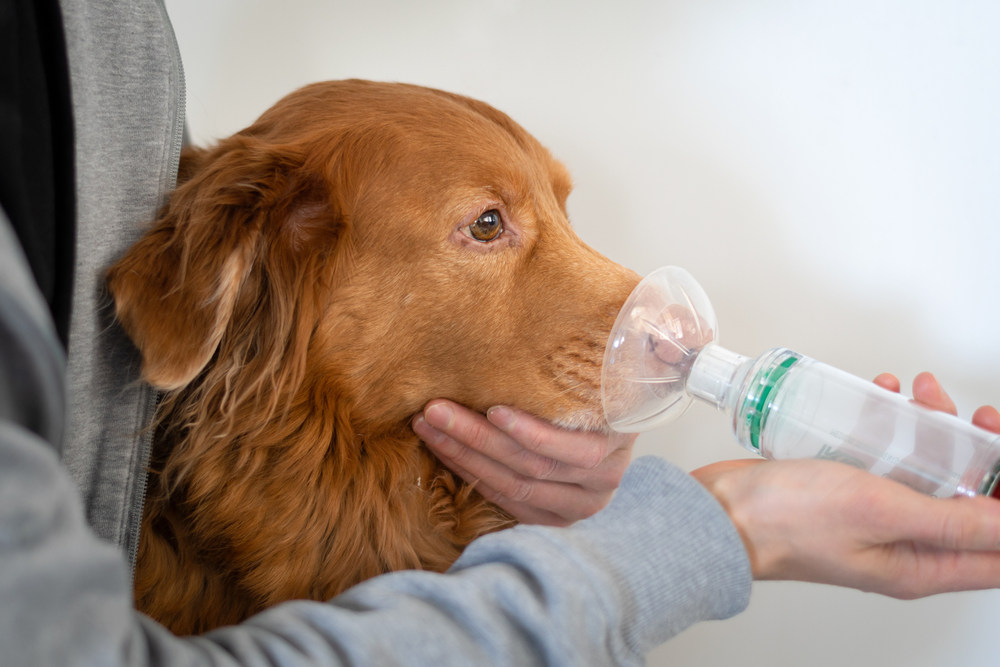
Did you know that not only can dogs suffer from asthma, but they can also be prescribed asthma puffers to manage their condition? After all, it’s not every day that you’ll see a dog taking a deep pull on their inhaler at the end of a run or at the peak of allergy season. And, while an asthma puffer may be a life-saving treatment for dogs with this challenging respiratory condition, it can also be a dangerous, even deadly, piece of equipment.
The medication contained within an asthma puffer for humans is usually the same type of medication as those prescribed for dogs, and toxicity from the drug is not very common when used correctly. The greatest risk to our canine companions from asthma puffers occurs when they are chewed. Pressure released from the inhaler canister can cause damage to your dog’s mouth or face, while one commonly used medication, salbutamol, can be deadly in high doses.
Let’s take a look into the safety and dangers of using asthma puffers around dogs, and how to keep your best friend safe.
If you are worried that your dog may have ingested or been affected by a toxic substance, contact your veterinarian, online consultant, or poisons hotline immediately.

Do Dogs Use Asthma Puffers?
Although not as common as it is in our feline friends, dogs can get asthma, along with a number of other respiratory conditions that affect the small airways. The type of medication dispensed by an inhaler will depend on the type of condition we’re treating, and how it affects the lungs.
Asthma is not strictly an allergy-based condition, but it can be made worse by environmental allergens like pollen and dust. The clinical signs seen in asthma are due to a hypersensitivity reaction in the small airways that triggers inflammatory cells to flood the area, resulting in swelling and mucous production that makes breathing in very difficult. Corticosteroids, usually in the form of fluticasone, are the most common form of treatment for asthma in dogs (as well as humans and cats), and this is the type of puffer that asthmatics will keep nearby at all times.
Another common type of inhaled medication is a bronchodilator like salbutamol (albuterol), a 𝛽-agonist that helps open up the airways. This drug is often used alongside fluticasone in asthma patients, as well as those with other chronic respiratory conditions.
When dogs are prescribed these medications, they come in a puffer with an extra piece of equipment called a spacer or nebulizer chamber, that allows your dog to inhale the drug properly. Because of the type of delivery system used, it is virtually impossible for a dog to receive a toxic dose unless given deliberately.
The main danger for dogs is when they play with, damage, or chew an inhaler.


The Danger of Asthma Puffers
The trouble with needing to use an asthma puffer is that it’s something you want to have close by in case of an emergency. For some people, that means keeping it in the same place, like a kitchen or bedroom drawer, the bathroom cabinet, or in their pocket. For others, it will often mean leaving an inhaler sitting on a coffee table, on the sofa beside them, or any number of places that your dog can easily get to.
An asthma puffer might not look particularly appealing to you, but to your dog, it is an interesting object that smells unusual and has angles and edges that make it a perfect chew toy. A chewed-up inhaler has two potential dangers:
- Physical damage caused by the gas cylinder
- Exposure to an overdose of the medication contained within the cylinder
The average asthma puffer contains around 200 doses compressed within that tiny canister, and a single puncture can cause the pressure inside to be released as a small explosion; something that could cause broken teeth, fractured jaw, damaged nerves, or worse.
More commonly, dogs that have managed to breach an asthma inhaler canister are affected by an overdose of the medication inside. While the effects of a fluticasone overdose are unlikely to be life-threatening, salbutamol toxicity can be deadly.

What Are The Signs of Salbutamol Toxicity?
The effects of salbutamol exposure appear rapidly, usually within 30 minutes, starting with the dog appearing anxious or agitated. The clinical signs of salbutamol toxicity include:
- rapid heart rate (tachycardia)
- rapid breathing (tachypnea)
- low potassium levels in the blood (hypokalemia)
- high blood glucose (hyperglycemia)
- muscle weakness or paralysis
- collapse
- vomiting
- arrhythmias
- muscle damage (rhabdomyolysis)
If you’re concerned about your pet’s well-being, we recommend consulting a veterinarian.
If you need to speak with a vet but can't get to one, head over to PangoVet. It's our online service where you can talk to a vet online and get the advice you need for your pet — all at an affordable price!

How Is Salbutamol Toxicity Treated?
Treatment for salbutamol toxicity is aimed at correcting the tachycardia and hypokalemia that are caused by the 𝛽-agonist. This involves the use of intravenous fluid therapy and beta-blockers to reverse the effects of the drug.
Even mild cases can have delayed or prolonged effects, so do not hesitate to get your dog to the vet if you think they may have been exposed, even if they aren’t yet showing any signs of toxicity. With treatment, most dogs will recover within 24 hours, but it may take several days for the effects to fully wear off.

You should never share medications with your pet. Although the type of drug used in your dog’s veterinary inhaler may be the same as yours, the dosage and concentration are likely to be different. The same applies to borrowing your dog’s medication!
How To Keep Your Dog Safe
- Always keep your asthma puffer safely secured, away from your pet, with all medications
- Teach your dog the command ‘drop it’ or ‘leave’ so you can get them to drop an object without you needing to remove it from their mouth
- Make sure children understand the dangers of letting the dog near their medication or asthma puffer

Final Thoughts
Dogs may be prescribed an inhaler or asthma puffer with very similar medications and appearance to the ones used by humans, and when used correctly, are perfectly safe. However, if your dog chews or damages an inhaler, they may be injured when the pressurized canister explodes, or, more commonly, be affected by the contents. Salbutamol (albuterol) is a potent 𝛽-agonist that works by dilating the airways, but in high doses can cause dangerously high heart rate, potassium, and muscle damage.
If your dog has chewed your (or their) inhaler, do not wait for them to show signs of toxicity. Speak to your vet or animal poisons consultant immediately for further advice. Keep your dog safe by securing all medication out of their reach, and be sure to teach them to drop any items they shouldn’t have – this is a valuable training tool that can save them from toxins, but it can also save many of your possessions from damage!
Pet Poisons Contacts
Featured Image Credit: Hanna Lepisto, Shutterstock