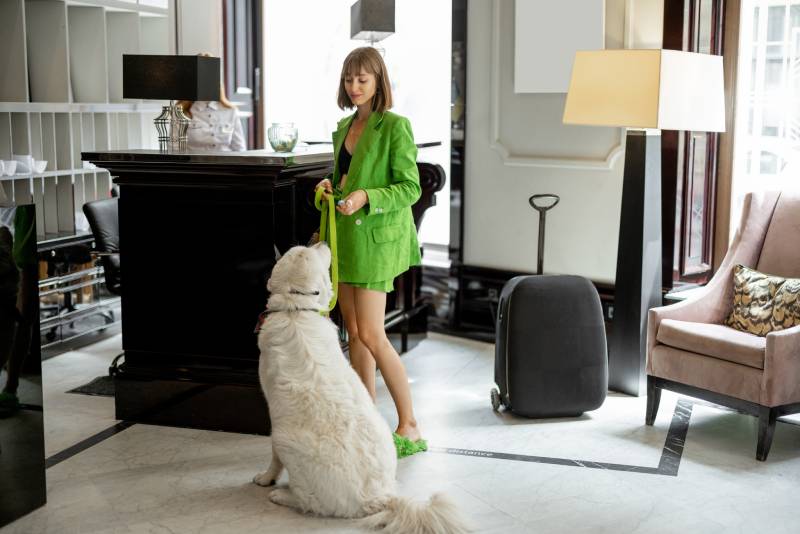
If you have a wanderlust nature and want to take your companion on adventures, you may be concerned about your dog’s behavior at the hotel. All dog owners know that they can be as good as gold at home, but as soon as the environment changes, so does their behavior.
Traveling, new places and faces, and a change in routine can stress your dog out, but there are some tips you can follow to help grow your dog’s hotel etiquette to five stars so you can travel and make memories together.

The 9 Tips & Tricks for Training Your Dog to Behave at Hotels
1. Desensitize Them to New Environments
It’s best to gradually expose your pet to new environments and experiences, other dogs, unfamiliar people, and new sounds. You can begin desensitizing your dog at different areas of your home, then with park visits, train rides, visits with family and friends, or trips to the beach. Introduce as many new scenarios as possible, but make sure your dog feels safe.
Start with short sessions, so you do not overwhelm your dog; they need to be positive experiences. As time passes and they feel more comfortable, you can make the sessions longer. Desensitization is a continuous process that helps your dog build confidence in various situations and scenarios.
2. Desensitize Your Dog to Car Rides
Desensitizing your dog to car rides will help with the trip to the hotel, as well as if you need to catch taxis or trains. If your dog is already comfortable with crate training, you are well on your way to success. However, if your dog is not comfortable in the transporter, this is your starting point.
The final goal is for your dog to remain calm inside their crate during a ride. Once you feel that they have mastered this step, you can practice by having a family member or friend drive you and your dog around in a different car.

3. Try a Practice Trip
Before you head off on your vacation, plan a “practice trip” by staying overnight with a friend. While there, you can leave your dog in a different room for short periods to see how they respond. It can even be helpful to set up a pet cam or Skype on your phone or laptop so you can watch how your dog reacts.
4. Don’t Change Your Dog’s Routine
When we go on vacation, we enjoy the change in routine, but it’s different for dogs, as they usually thrive from routine. Try to keep their routine the same as at home, and respect their feeding times and walking times, as this will help them adapt.
Bring familiar items, such as their favorite toys and blankets, the same bowls, and, if possible, the same bed. Try to spend more time than you normally do at home interacting and playing with your dog. This will help make the experience positive and memorable for them and build their confidence in new environments. Ask a vet about other ways to make your dog comfortable while traveling.
If you need to speak with a vet but can't get to one, head over to PangoVet. It's our online service where you can talk to a vet online and get the advice you need for your pet — all at an affordable price!

5. Have a Plan B
If you notice your dog struggling in a new environment, give them a break: Take them out for a walk and distract them a bit. Try to identify if there is anything in particular that is stressing your dog, and if possible, remove it. If you cannot determine a single cause, see if there is a way to create a positive experience in the new environment before your dog gets into a negative headspace. For example, playing can do wonders, so you should always have toys with you to prepare for this situation. Don’t give your dog a reinforcer while they are not calm; otherwise, you will be reinforcing them for being stressed or nervous instead of helping them to relax.
6. Don’t Encourage Troubling Behaviors
Any time you spend with your dog is actually teaching them. If you allow them to act up at a hotel, you are encouraging them. If you promote excitement in a new environment, your dog may be over-animated when arriving at the hotel. They need to stay calm while traveling and during their stay.

7. Know Your Dog’s Stress Signals
No matter how well-behaved your dog is, new environments, people, and changes in routine can cause them stress. Dogs show stress in different ways, so it’s important to know how your dog responds so you know whether they need comfort. Typical signs of stress include yawning, moaning, panting, lip licking, and pacing.
You can help your dog by finding a quiet spot or taking a slow walk in an area that is not too busy.
8. Teach Your Dog Not to Bark
This may sound cruel, but we don’t mean teaching your dog not to bark at all, just when you tell them to stop. When your dog barks, ignore them and do not give them any attention until they stop. Then, once they are quiet, calmly say your chosen command, such as, “Quiet.” Reward them with attention and their favorite treat.
Keep in mind that you should never reward them while they are barking. Your dog will eventually realize that there are good consequences to stopping barking, and they can learn to associate this with the command.

9. Use a Synthetic Pheromone Diffuser
A synthetic pheromone diffuser can help your pup feel calm and have a sense of familiarity and well-being while in the hotel room. For this to work, you must start using the diffuser at home a month or a few weeks before the trip. These products mimic the feel-good and calm chemical messages sent to nursing puppies from their mothers. These chemical messages will help your pup better adapt to the big change.
Before You Travel With Your Dog
Before you get into vacation mode and plan a trip with your dog, consider these factors:
- If your dog is pregnant, injured, or unwell, it’s best to stay home where they are happy and comfortable.
- Their obedience, potty training, and training must be up to scratch and suitable for traveling and hotel stays.
- Make sure their ID tags are up to date.
- Schedule a check-up with your vet before you leave, and ensure your dog’s vaccinations are up to date.
- If you have pet insurance, double-check with your provider to see if you have coverage in case your dog needs medical attention or falls ill.
Make Sure Your Pet Is Allowed
Naturally, you want to make sure before your trip that the hotel you will be staying at is pet-friendly. Otherwise, you will already be off to a bad start. You can call the hotel to check for any restrictions, fees, or additional requirements; some hotels only accept certain breeds and dogs of a certain weight.
- A policy may need to be signed.
- Your dog may need a leash or carrier while you are not in the room.
- If your dog is considered disruptive by hotel management, they may have the right to call animal control and have your dog removed from the room.
- Some hotels will charge a non-refundable pet fee, and any damages that occur during your stay will need to be paid for.
Choose the Best Location
The location of the hotel room you book can make all the difference. Ask for a room with quick access, preferably a ground-floor room close to a grassy area, if possible. Rooms away from busy areas and elevators can help reduce noise and make your dog feel more at ease in your room.
Be Realistic About Your Dog’s Behavior
Not all pets are good travelers, and certain behaviors, such as excessive barking, inconsistent potty training, and anxiety, can make them unsuitable for hotel stays. If training is unsuccessful, you can look for a good boarding kennel or pet sitter. Traveling and overnight stays in hotels with a dog that is not properly trained can be a nightmare, so do not force it. If you feel your dog is not cut out for it, make alternative arrangements.
Additional Tips for Staying in a Hotel With Your Dog
- Pet-proof the room to the best of your ability.
- Try not to leave your dog in the hotel room for too long or too often. Look for activities in the area that can include your dog.
- Respect hotel rules, and clean up after your dog if they make a mess.
- Bring chew toys so there is minimal chance of your dog chewing something that they shouldn’t.
- Be patient, and remember that your dog may not behave the same as when you are at home.
- Make use of the “do not disturb” sign so any unexpected knocks won’t get your dog barking.
Final Thoughts
Traveling with your beloved dog can be one of the most fun and memory-making experiences, but preparation is vital. By training and preparing your dog, you can establish good behavior and set out on your vacation much more confidently. Remember that training takes patience and time and should always be done with positive reinforcement.
Also, be realistic about your dog’s behavior. If you are not confident enough in their suitability for hotel stays or if your dog becomes easily stressed, it may be best to leave them with a pet sitter. Never force the situation, as it can result in an unhappy dog, unhappy hotel guests, and an unhappy owner with additional bills.
See Also:
Featured Image Credit: Ross Helen, Shutterstock
 The 9 Tips & Tricks for Training Your Dog to Behave at Hotels